Namaste is one of the most familiar and meaningful words used in Indian culture. At first glance, it may appear to be just a simple greeting, but in reality, it carries deep respect, humility, and spiritual meaning. It is often used when meeting someone, saying goodbye, or acknowledging another person with warmth and reverence. In many Indian families and spiritual traditions, Namaste is not only a word but also an attitude of respect.
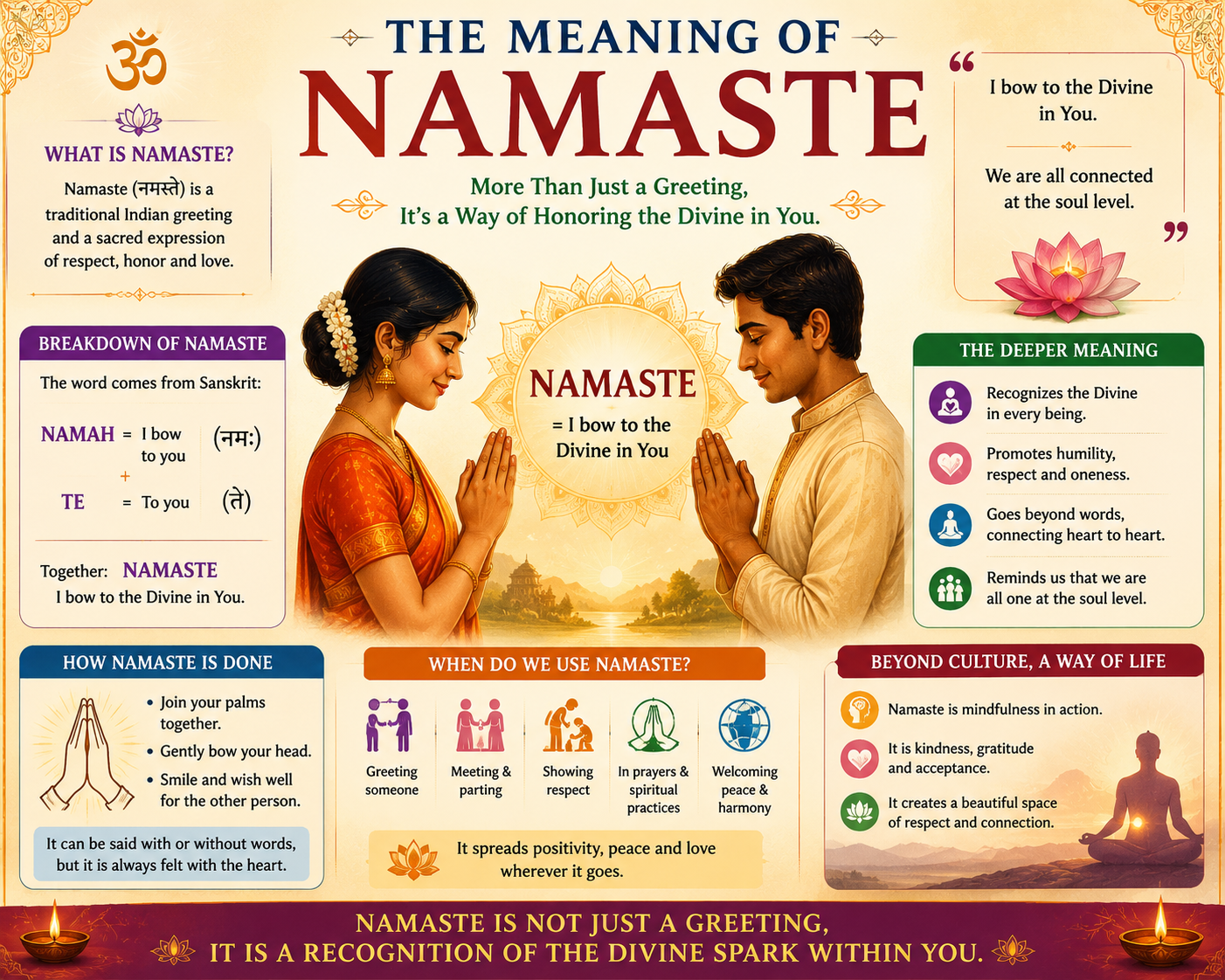
The word Namaste is commonly understood as a greeting that means “I bow to you” or “the divine in me honors the divine in you.” It reflects the idea that every human being has dignity and worth. This makes Namaste much more than a social habit. It is a way of recognizing the value of another person with sincerity and grace.
For beginners, Namaste is easy to say but rich in meaning. It connects language, gesture, and emotion in one simple act. When people join their palms together and slightly bow their head, they are expressing respect through body, mind, and heart. That is why Namaste continues to be used not only in India but also around the world as a symbol of peace and mindfulness.
Origin of Namaste
The word Namaste comes from Sanskrit, the ancient language of Indian spiritual and philosophical texts. It is formed from the roots that mean “to bow” or “to salute.” Over time, it became a common greeting in Indian society and spiritual practice.
In traditional usage, Namaste is not just spoken casually. It is often accompanied by a gesture called anjali mudra, where the palms are pressed together near the chest. This gesture symbolizes unity, respect, and a calm inner state. The combination of word and gesture makes the greeting complete.
Historically, Namaste has been used in both everyday life and religious or philosophical settings. It appears in homes, temples, schools, and public gatherings. Its long history shows how deeply it is rooted in Indian culture and values.
Spiritual meaning
One of the most beautiful aspects of Namaste is its spiritual meaning. It teaches that every person deserves respect because there is something sacred in all living beings. The greeting is often interpreted as a recognition of the divine presence within another person.
This idea reflects a larger Indian spiritual worldview, where the self is not seen as separate from higher truth. By saying Namaste, a person expresses humility and acknowledges that the other person is worthy of honor. This creates a sense of equality and sacred connection.
In this way, Namaste is not only about social manners. It is also a reminder to approach life with awareness, kindness, and reverence. A simple greeting becomes a spiritual practice when it is spoken with genuine feeling.
Cultural importance
Namaste holds a special place in Indian culture because it reflects politeness, modesty, and mutual respect. In many households, children are taught to greet elders with Namaste as a sign of good upbringing and values. It is also used in formal situations to show courtesy.
Unlike some greetings that are purely functional, Namaste carries emotional depth. It can express friendship, respect, gratitude, and humility all at once. This makes it flexible and meaningful in many contexts.
Even in modern times, Namaste remains widely used because it feels warm and respectful. Whether in a village, city, office, or spiritual gathering, the greeting continues to connect people in a simple but dignified way.
Namaste gesture
The gesture of Namaste is as important as the word itself. When the palms are joined together in front of the chest and the head is slightly bowed, the body expresses what the word says. This physical movement adds sincerity to the greeting.
This gesture is often seen in yoga and meditation traditions as well. It helps the person become centered, calm, and respectful. The posture itself suggests balance and inner peace.
Because of its graceful appearance, the Namaste gesture is also recognized internationally. Many people around the world associate it with peace, mindfulness, and spiritual awareness.
Everyday use
In daily life, Namaste is used in many different situations. It may be spoken when meeting someone, leaving a place, greeting a teacher, or showing respect to an elder. It is also commonly used in temples and religious events.
The word is simple enough for casual use but respectful enough for formal use. That is one reason it has remained so popular for generations. It works in ordinary conversation and in sacred spaces alike.
For many people, saying Namaste becomes a natural habit that reflects their upbringing and cultural identity. It helps keep relationships courteous and respectful.
Difference from hello
Although Namaste can be translated loosely as hello, it is not exactly the same as an ordinary English greeting. Hello is generally neutral and practical, while Namaste carries a deeper sense of respect and spiritual recognition.
This difference matters because Namaste is not only about starting a conversation. It is about honoring the other person. The greeting creates a more thoughtful and meaningful connection between people.
Because of this, Namaste often feels more personal and sincere than many modern greetings. It reminds people that communication can be both polite and mindful.
Namaste in yoga
Namaste has become especially well known in yoga culture. At the beginning or end of a yoga session, teachers and students often say Namaste to acknowledge one another with respect. In this setting, the word expresses gratitude, unity, and shared inner peace.
In yoga, Namaste fits naturally because yoga itself is about awareness, balance, and spiritual connection. The greeting reinforces the idea that the practice is not only physical but also mental and spiritual.
For many people around the world, yoga introduced them to Namaste. As a result, the word has become a global symbol of calmness, respect, and inner harmony.
Why Namaste matters
Namaste matters because it teaches something very important in a simple form: every person deserves dignity. In a world where people often rush through interactions, Namaste invites them to pause and show respect.
It also reminds us that culture and spirituality can be expressed through small actions. A greeting does not have to be ordinary. It can carry beauty, wisdom, and humanity.
Because of this, Namaste is more than a word from the past. It is a living expression of values that remain relevant today, such as respect, peace, and connection.
Conclusion
The meaning of Namaste goes far beyond a simple greeting. It is a gesture and word of respect, humility, and spiritual recognition. It reflects the idea that there is something sacred in every person and that human interactions should be marked by dignity and kindness.
Whether used in daily life, in temples, in yoga, or in formal settings, Namaste continues to express a timeless truth. It reminds us to greet others not just with words, but with awareness and respect. That is why Namaste remains one of the most beautiful and meaningful expressions in Indian tradition.