Kundalini Energy is often described as a powerful spiritual energy that lies dormant at the base of the spine. In many yogic and Hindu traditions, it is believed that this energy can be awakened through meditation, breathwork, mantra, yoga, and spiritual discipline. When awakened, Kundalini is said to rise through the body’s energy centers, or chakras, leading to expanded awareness, deep inner change, and spiritual realization.
For beginners, Kundalini can sound mysterious or even intimidating. Some people describe it as a hidden force within every human being, while others see it as a symbolic way of explaining transformation, consciousness, and the process of inner awakening. Whether viewed literally or spiritually, the idea of Kundalini has fascinated seekers for centuries because it connects the body, mind, and soul in one profound concept.
In many traditions, Kundalini is not treated as an ordinary type of energy. It is seen as sacred, subtle, and powerful. Because of that, it is often approached with respect, patience, and caution. People who study Kundalini usually learn that it is not something to rush. It is part of a deeper journey of self-awareness, discipline, and inner purification.
Meaning of Kundalini
The word Kundalini is usually associated with the Sanskrit root meaning “coiled” or “looped.” This image is often used to describe an energy that lies dormant, folded or coiled like a sleeping serpent at the base of the spine. The serpent symbol is important because it represents hidden power, transformation, and awakening.
In spiritual language, Kundalini represents the potential for human consciousness to rise beyond ordinary awareness. It is not just about physical sensation or emotional experience. It is connected to the deeper question of who we are, what the purpose of life is, and how a person can move from limitation toward freedom.
The idea of Kundalini appears mainly in yogic, tantric, and meditative traditions. Over time, it has become a well-known concept in modern spirituality as well. Many people now use the term to describe intense periods of change, inner breakthrough, or spiritual awakening, even if they do not follow a formal religious path.
Kundalini in spiritual tradition
Kundalini is most often discussed in the context of yoga and Hindu philosophy, especially in traditions that focus on subtle energy, mantra, breath control, meditation, and inner purification. In these traditions, the human body is seen not only as physical matter but also as a vessel of energy, consciousness, and spiritual potential.
According to these teachings, Kundalini rests in a dormant state until a person becomes ready for spiritual growth. When awakened in a balanced and guided way, it is said to move upward through the chakras, cleansing inner blockages and bringing higher awareness. This rise is often described as a sacred process rather than a purely physical one.
Different teachers explain Kundalini differently. Some present it as a literal energy, while others explain it more symbolically, as the awakening of dormant capacities in the human psyche. Either way, the theme is the same: human beings have hidden potential that can be developed through discipline and spiritual practice.
The chakra system
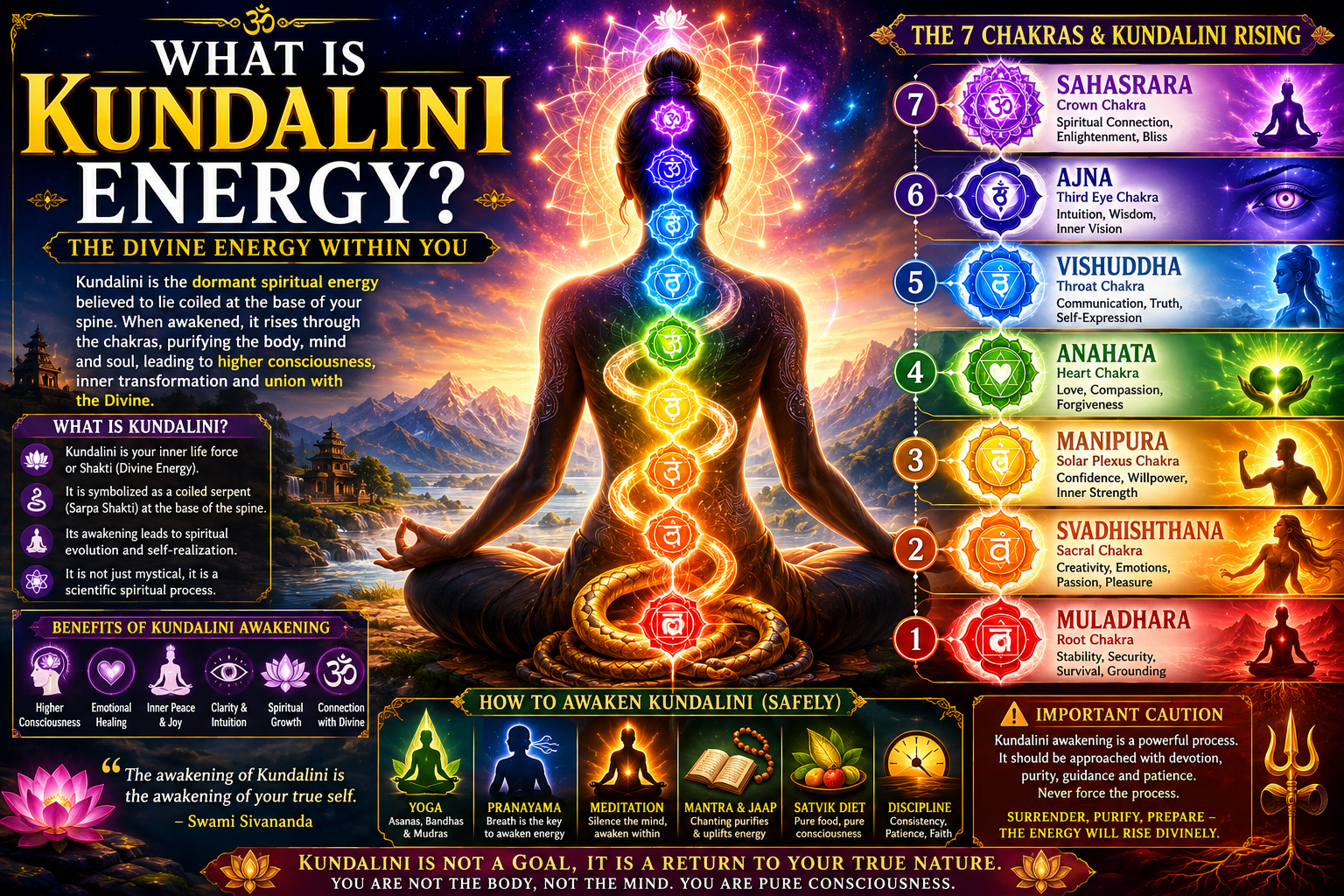
Kundalini is closely connected with the chakra system. Chakras are considered energy centers in the subtle body, each associated with different qualities of life and consciousness. The common chakra system includes seven main chakras, starting from the base of the spine and rising to the crown of the head.
The first chakra, at the base, is linked with survival, stability, and grounding. The second is associated with creativity, emotions, and relationships. The third relates to willpower and personal strength. The fourth is the heart chakra, connected with love and compassion. The fifth is linked to communication and expression. The sixth is associated with intuition and inner vision. The seventh, at the top of the head, symbolizes spiritual connection and higher consciousness.
In Kundalini teachings, the energy rises through these centers one by one. As it does, a person may experience changes in emotional life, mental clarity, spiritual perception, and self-understanding. The chakras are therefore not just symbolic points; they represent stages of inner development.
Kundalini and awakening
The term “Kundalini awakening” refers to the process in which dormant spiritual energy begins to rise. This awakening may happen gradually through long-term spiritual practice, or suddenly during a powerful meditation, life event, or period of intense inner work.
Many spiritual seekers describe awakening as a deep shift in how they experience reality. They may feel greater sensitivity, inner peace, strong energy, emotional release, vivid dreams, or a stronger connection with life and consciousness. Others may describe it as a period of confusion before clarity appears.
It is important to understand that awakening is not always dramatic. In many traditions, the best kind of Kundalini growth is quiet, steady, and well-balanced. The goal is not sensation for its own sake, but transformation of the self. A true awakening should ideally lead to wisdom, humility, compassion, and stability.
Signs of Kundalini awakening
People often talk about certain signs that may appear during Kundalini awakening. These signs are not the same for everyone, and they should not be treated as proof of anything by themselves. Still, common experiences include increased energy, feeling warmth or movement in the spine, emotional release, changes in sleep, unusual vividness in perception, or a strong need for solitude and reflection.
Some people report a greater interest in meditation, prayer, nature, or spirituality after the process begins. Others may experience intensified emotions, old memories returning, or a sense that life is changing from the inside out. Sometimes the awakening is experienced as blissful; other times it can feel overwhelming if the person is not prepared.
Because these experiences can vary so much, it is wise not to jump to conclusions. Similar feelings can also come from stress, anxiety, lifestyle changes, or other health factors. A balanced approach means paying attention to the whole person, not just one sign or sensation.
Benefits often associated with Kundalini
In spiritual traditions, Kundalini awakening is associated with many positive outcomes. One major benefit is a deeper sense of self-awareness. People may feel more connected to their emotions, thoughts, and life purpose. This can lead to better decision-making and greater inner clarity.
Another possible benefit is spiritual growth. As awareness expands, a person may develop more compassion, patience, gratitude, and devotion. They may feel a stronger bond with the divine, with humanity, or with the larger universe. Some people also report that their meditation becomes deeper and more meaningful.
Kundalini practices may also encourage discipline and self-study. When approached carefully, they can help a person become more conscious of habits, fears, and desires. This self-knowledge is valuable because it allows personal transformation to happen in a grounded way.
Risks and challenges
Kundalini is often presented as powerful, but power always requires responsibility. If someone practices intensely without preparation, guidance, or balance, the experience can become difficult. Some people may feel overwhelmed by energy surges, emotional instability, confusion, or physical discomfort.
This is why many teachers advise patience. Awakening should not be forced. Trying to push energy upward too quickly can create imbalance rather than growth. A person may become mentally tired, emotionally sensitive, or physically stressed if they do not respect the process.
It is also important to remember that not every unusual experience is spiritual in origin. Some signs that people associate with Kundalini can have ordinary health explanations. Because of this, anyone having severe or distressing experiences should seek appropriate support and not rely only on spiritual interpretation.
Safe approach for beginners
For beginners, the safest way to explore Kundalini is slowly and respectfully. Instead of trying advanced methods right away, it is better to begin with simple meditation, breathing exercises, gentle yoga, prayer, or mantra chanting. These practices help stabilize the body and mind before deeper work begins.
A stable daily routine is also important. Good sleep, healthy food, hydration, and a calm environment all support inner balance. Spiritual growth tends to be smoother when the body is cared for properly. In many traditions, outer discipline supports inner awakening.
It is also wise to study from trustworthy teachers and avoid sensational claims. Real spiritual progress is usually gradual, grounded, and humble. If a method creates fear, pressure, or extreme confusion, it may not be the right path for that person at that time.
Kundalini and meditation
Meditation is one of the main practices associated with Kundalini. Through meditation, the mind becomes quieter and more aware, making it easier to observe inner energy and hidden mental patterns. Over time, this can create the conditions for deeper spiritual insight.
Some meditative traditions focus on the breath, while others use a mantra or visual focus. The purpose is not to force anything but to create stillness and awareness. In that stillness, a person may begin to notice energy, emotion, and consciousness in a more direct way.
The best meditation for Kundalini is usually one that develops stability, not excitement. A calm mind and an open heart are more useful than dramatic experiences. The goal is not to chase energy but to become ready for truth.
Kundalini and yoga
Yoga plays an important role in many Kundalini traditions because it helps prepare the body and nervous system. Gentle, disciplined yoga postures may open tension, improve breath, and support concentration. In some systems, yoga is seen as a foundation for subtle energy work.
However, yoga in the Kundalini sense is more than exercise. It is a whole discipline that includes ethics, breath, focus, and inner awareness. The physical postures are only one part of the journey. True yoga aims at union, clarity, and spiritual growth.
For beginners, yoga can be a safe and helpful way to begin exploring the idea of Kundalini without rushing into advanced techniques. It helps build patience, self-control, and awareness of the body.
Kundalini and breath
Breath is central to many spiritual traditions because it connects body and mind. In Kundalini practice, breathwork is often used to calm the nervous system, focus attention, and move subtle energy. Controlled breathing can help a person become more centered and aware.
At the same time, breath practices should be done carefully. Strong breathing techniques are not suitable for everyone, especially without guidance. Gentle breathing is usually the best starting point for beginners because it supports balance without creating strain.
When breath becomes steady, the mind often becomes steadier too. That is one reason breathing is such a powerful bridge between ordinary life and spiritual practice.
Kundalini and the nervous system
Even though Kundalini is a spiritual concept, many people today also discuss it in relation to the nervous system. When a person goes through major inner change, the body can respond strongly. Sensations, emotions, and awareness are often connected, so spiritual experiences may be felt physically as well.
This is one reason why balance matters so much. A healthy nervous system supports clear awareness, while stress can make experiences feel chaotic. Grounding practices, rest, and simple routines help the body handle intense inner change more smoothly.
Understanding this connection can help beginners avoid unnecessary fear. Not every sensation means something dangerous, and not every intense experience should be ignored. A wise approach respects both spiritual and physical well-being.
Symbolism of the serpent
The serpent is one of the most common symbols linked with Kundalini. In many cultures, the serpent represents wisdom, hidden power, renewal, and transformation because it sheds its skin and appears renewed. In Kundalini symbolism, the coiled serpent suggests dormant energy waiting to awaken.
This image can be understood literally or symbolically. Literally, some people believe in subtle energies moving through the body. Symbolically, the serpent can represent the inner human potential that sleeps until it is awakened by discipline and insight.
Either way, the symbol teaches that transformation is natural but must be handled with respect. Growth is powerful, but it unfolds best when guided by patience and wisdom.
Kundalini in modern spirituality
Today, Kundalini is discussed not only in traditional Hindu and yogic circles but also in modern spiritual communities around the world. Some people approach it through meditation, some through yoga, and some through self-inquiry or energy healing. The term has become popular because it speaks to the universal desire for inner awakening.
However, modern use of the word can sometimes be loose or exaggerated. People may apply it to many different experiences without a clear understanding of the original tradition. This is why studying carefully is important. The more one learns, the easier it becomes to separate genuine practice from hype.
A thoughtful beginner should focus less on dramatic labels and more on actual growth. Compassion, calmness, clarity, and self-knowledge are more important than claiming a spiritual experience.
Misunderstandings about Kundalini
One common misunderstanding is that Kundalini is only about strange sensations or supernatural events. In reality, the deeper purpose of Kundalini teaching is transformation of consciousness and character. Sensations may happen, but they are not the goal.
Another misunderstanding is that Kundalini awakening always makes life easier. In truth, deep change can be challenging before it becomes clearer. Old habits, emotions, and fears may come to the surface. That is part of the cleansing process, not a sign of failure.
A third misunderstanding is that anyone can force the awakening through technique alone. Most traditions say that readiness, discipline, and grace are all important. The process is not mechanical; it is personal and spiritual.
How to study Kundalini wisely
The best way to study Kundalini is with humility and patience. Start with the basics of yoga, meditation, and spiritual discipline. Learn the meaning of the chakras, the role of breath, and the importance of balance before trying advanced methods.
It is also helpful to read from more than one source. Traditional teachers, modern scholars, and experienced practitioners may all offer different insights. A beginner should listen carefully, compare ideas, and avoid treating one perspective as the only truth.
Most importantly, study should lead to practice. Knowledge alone is not enough. Regular, sincere practice is what turns understanding into lived experience.
Kundalini and personal growth
Even when people do not use the term in a mystical sense, the idea of Kundalini can still be deeply useful. It reminds us that human beings contain more potential than they usually realize. Hidden strength, creativity, courage, and wisdom may awaken when life calls for them.
In that sense, Kundalini can be seen as a symbol of inner evolution. It represents the journey from confusion to clarity, from fear to trust, and from limitation to freedom. This interpretation can be meaningful even for people who are not strongly religious.
The most important lesson is that awakening should make a person more grounded, not less. Real growth makes life more compassionate, more honest, and more conscious.
Conclusion
Kundalini Energy is a profound spiritual idea found in yogic and Hindu traditions. It refers to a dormant power at the base of the spine that may awaken and rise through the chakras, leading to inner transformation and expanded awareness. Whether understood literally, symbolically, or both, the idea points to the hidden spiritual potential within human beings.
For beginners, the key is not to rush. Kundalini should be approached with respect, balance, and patience. Gentle meditation, yoga, breath awareness, and a grounded lifestyle are the safest ways to begin. When handled wisely, the path can support deep healing, self-understanding, and spiritual growth.
At its heart, Kundalini is a reminder that the human being is not finished or fixed. There is always more depth to discover, more clarity to gain, and more truth to live. That is why the concept continues to inspire seekers across generations and traditions.