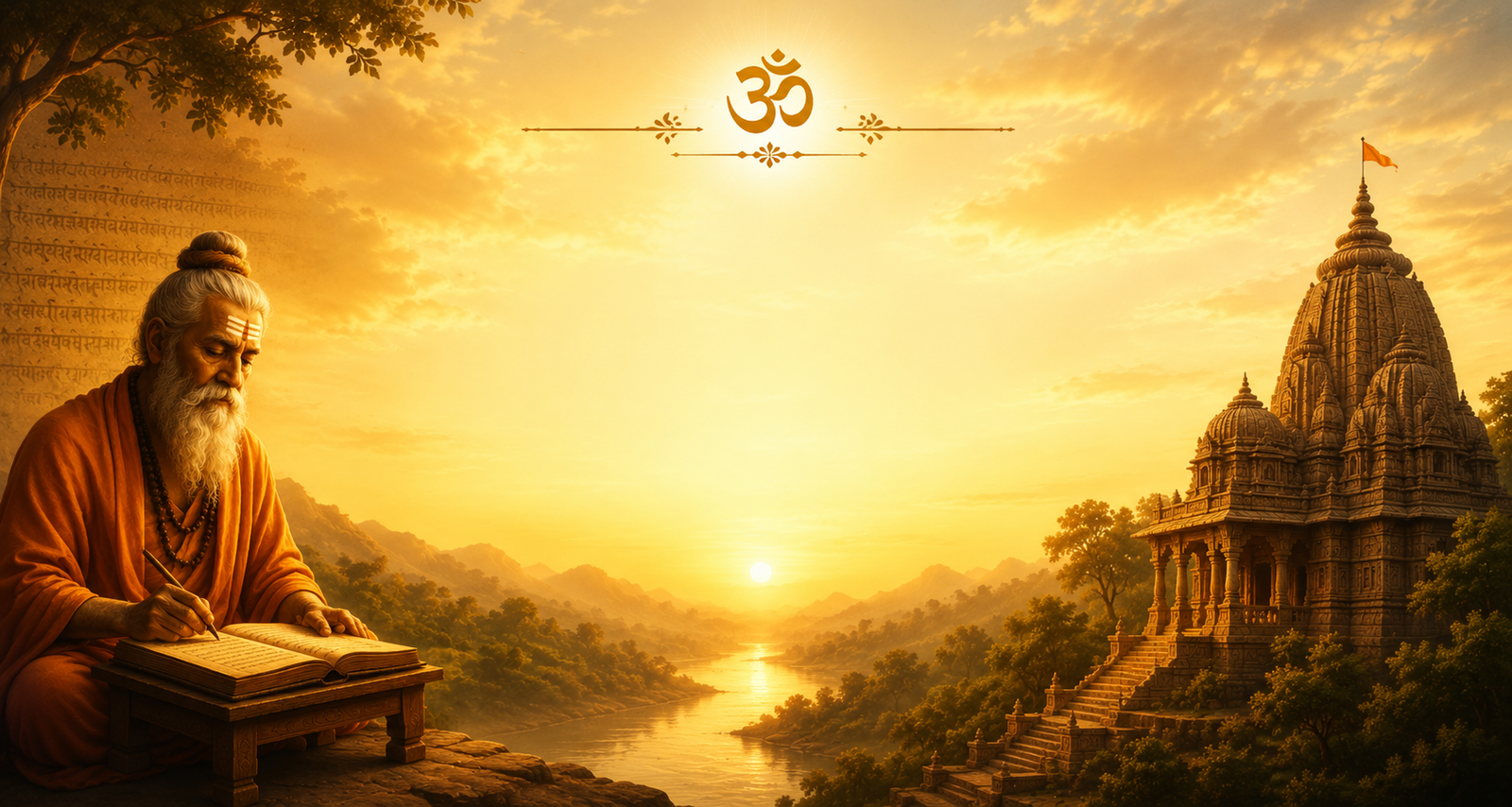
Ancient Vedic wisdom has survived for thousands of years because it speaks to universal human needs. People in every era search for purpose, peace, direction, and a way to live well. The Vedic tradition offers answers that are not limited to any one time or culture. Its teachings are simple in spirit but deep in meaning, and that is why they continue to matter even in the modern world.
At first glance, modern life and Vedic wisdom may seem very different. Modern life moves quickly, values speed and productivity, and often leaves people feeling stressed or disconnected. Vedic wisdom, on the other hand, emphasizes inner discipline, self-knowledge, harmony, and spiritual awareness. Yet these two worlds are not separate. The deeper one looks, the more one sees that ancient teachings can bring balance to modern problems.
The Vedas and related texts such as the Upanishads and Bhagavad Gita do not simply offer rituals or religious rules. They offer a way of understanding life itself. They teach that human beings are part of a larger order, that actions have consequences, and that peace comes from living with truth and responsibility. These ideas can help anyone, whether religious or not, live with more clarity and meaning.
What Vedic wisdom means
Vedic wisdom is the body of knowledge found in the ancient Sanskrit texts of India, especially the Vedas, Upanishads, and later spiritual works rooted in that tradition. It covers questions about the universe, the self, duty, knowledge, prayer, and liberation. It is not only about rituals. It is also about how to live wisely.
At the heart of Vedic thought is the idea that life has order. This order is often called dharma or cosmic harmony. Human beings are happiest when they live in alignment with truth, responsibility, and balance. When they act against these principles, suffering increases. This makes Vedic wisdom highly practical, because it connects inner life with outer action.
Vedic teachings also remind us that the self is more than the body or the personality. There is a deeper dimension of consciousness that can be known through reflection, discipline, and spiritual practice. This view gives life a sense of depth that can be very helpful in a modern world often focused only on surface success.
Why it still matters
Many people today feel overwhelmed by pressure, comparison, distraction, and uncertainty. Technology connects us more than ever, but it can also pull us away from ourselves. Vedic wisdom is relevant because it offers tools for inner stability. It teaches how to slow down, reflect, and live with intention.
One of its greatest strengths is that it does not reject daily life. It does not say that one must leave the world to find meaning. Instead, it encourages wise action in the world. This is especially important for modern people who must balance work, family, relationships, and personal growth. Vedic wisdom helps bring order to that complexity.
Another reason it matters is that it supports ethical living. In a world where shortcuts and self-interest are common, the Vedic emphasis on truth, duty, compassion, and self-control provides a strong moral foundation. These are not outdated values. They are still necessary for healthy individuals and healthy societies.
Dharma in daily life
Dharma is one of the most important ideas in Vedic wisdom. It means duty, righteousness, and the right way of living. It is not only a religious concept. It is also a practical guide for daily life. A person’s dharma may include responsibilities as a parent, student, worker, friend, or citizen.
Living by dharma means acting in a way that supports harmony. It encourages people to do what is right, even when it is difficult. It also reminds them that life is not only about personal desire. We are part of families, communities, and larger systems, and our choices affect others.
In modern life, dharma can help people make better decisions. Instead of asking only, “What do I want?” a person can ask, “What is right?” or “What supports balance and goodness?” This shift in thinking can reduce confusion and bring more peace.
Karma and responsibility
Karma is another central Vedic teaching. It means action and the results of action. The idea is simple but powerful: every action creates an effect. This teaches personal responsibility and awareness.
In modern life, people often want quick results without considering long-term consequences. Karma reminds us that actions matter. How we speak, work, spend, and treat others shapes our future. Good habits create positive momentum. Harmful habits create suffering.
This teaching is especially useful in a fast-paced world. It encourages people to think before acting and to take ownership of their choices. It also offers hope, because no matter what the past has been, present action can begin a new direction.
Truthfulness and integrity
The Vedic tradition gives great importance to truth. Truthfulness is not only about speaking honestly. It is also about living with integrity, meaning that one’s words, thoughts, and actions are aligned.
Modern life often rewards image over substance. People may feel pressure to appear successful even when they are struggling inside. Vedic wisdom offers a different message: real strength comes from truth. A person who lives honestly builds trust, clarity, and inner peace.
Truthfulness also helps simplify life. Lies and pretenses create tension and fear. Truth creates freedom. This is why the Vedic emphasis on satya, or truth, remains so relevant today.
Compassion and kindness
Another timeless Vedic value is compassion. Ancient wisdom recognizes that all life is interconnected. Because of this, kindness is not just a nice idea; it is a spiritual necessity. When we hurt others, we weaken harmony. When we help others, we strengthen it.
Modern life can make people impatient and self-centered. Competition sometimes replaces care. Vedic wisdom reminds us that compassion is a strength, not a weakness. It helps build healthy relationships, peaceful communities, and a more meaningful life.
Compassion also begins with self-awareness. A person who understands their own suffering becomes more capable of understanding others. This makes empathy a natural part of spiritual growth.
Balance between material and spiritual life
One of the most practical lessons from Vedic wisdom is balance. It does not reject material life, but it also does not let material life become the only goal. A person needs work, health, family, and responsibilities, but also reflection, prayer, and self-knowledge.
In modern life, balance is often difficult. People may become too focused on work and lose their inner peace. Others may seek only comfort and avoid responsibility. The Vedic approach encourages both outer success and inner maturity.
This balance is not always easy to achieve, but it is deeply worthwhile. It allows a person to live fully without becoming trapped by pressure or emptiness. The aim is not escape, but harmony.
Mindfulness and inner awareness
Although the word mindfulness is modern, the spirit of it is very Vedic. The ancient texts encourage awareness of breath, thought, action, and self. This awareness is essential for wise living.
Modern life is filled with noise. People constantly receive information, messages, and demands. Without inner awareness, they can lose themselves in the rush. Vedic wisdom teaches the value of pausing, observing, and returning to the deeper self.
Meditation, prayer, contemplation, and silent reflection are all ways of developing this awareness. They help calm the mind and bring clarity. A calm mind makes better choices and experiences life more fully.
Self-control and discipline
The Vedic path values discipline because real growth requires effort. Self-control does not mean suppression or harshness. It means learning to guide one’s habits rather than being ruled by impulse.
This is highly relevant in modern life, where distraction is constant and temptations are easy to access. Discipline helps a person stay focused on what truly matters. It supports health, learning, emotional balance, and spiritual progress.
Small daily disciplines can have a great effect. Waking early, eating mindfully, speaking carefully, and making time for reflection are simple examples. Vedic wisdom shows that big transformation often begins with small, steady habits.
Seeing divinity in all beings
Another beautiful idea in Vedic wisdom is the recognition of divinity in all beings. This does not always mean the same thing in every school of thought, but the general principle is clear: life is sacred.
This idea can transform how people treat one another. If the divine is present in all beings, then disrespect, cruelty, and indifference become more difficult to justify. Respect becomes natural. Service becomes meaningful.
In a modern world often divided by identity, competition, and opinion, this teaching is very important. It encourages a wider vision of human dignity and connectedness. It reminds us that every person deserves care and recognition.
Vedic wisdom and work
Modern life places a lot of importance on career and productivity. Vedic wisdom does not reject work, but it changes how work is understood. Work becomes a field of dharma, service, and self-growth rather than only a way to gain status or money.
A person who works with awareness can perform duties without becoming attached to praise or failure. This reduces stress and improves focus. It also helps people see work as part of a larger purpose.
This approach is especially helpful today, when burnout is common. Instead of measuring life only by outcome, Vedic wisdom asks people to focus on right action. That shift can make work more meaningful and less exhausting.
Relationships and respect
Vedic wisdom also applies to relationships. It teaches respect, duty, patience, and honesty. These qualities are essential for family life, friendship, and community.
In modern times, relationships can become shallow or overly transactional. The Vedic view encourages deeper bonds based on trust and mutual responsibility. It also reminds people that relationships require effort and care.
When people bring compassion and integrity into their relationships, they create stronger and healthier connections. This is one of the most practical gifts of ancient wisdom.
Peace of mind
Many modern people search for peace of mind, but they look for it in external success alone. Vedic wisdom points in a different direction. It says that lasting peace comes from inner alignment, not just outer achievement.
Peace grows when a person lives truthfully, acts responsibly, practices moderation, and learns to quiet the mind. It is strengthened by meditation, prayer, and self-understanding. It also grows through gratitude and acceptance.
This kind of peace is not passive. It is active and stable. It helps people face life’s challenges without losing themselves.
Nature and harmony
The Vedic tradition sees life as interconnected, and that includes nature. The world is not something separate from spiritual life. It is part of the same sacred order.
This idea is especially important today because modern society often treats nature as a resource to be used rather than a reality to be respected. Vedic wisdom encourages harmony with the environment and gratitude for the natural world.
Living in balance with nature is not just a practical issue. It is also a moral and spiritual one. Respecting the world around us is part of respecting life itself.
Modern relevance
The real power of ancient wisdom is that it still works. Its teachings are not dependent on technology or historical context. They address human nature, and human nature does not change as quickly as fashion or machines.
Whether someone is facing stress, confusion, loneliness, ambition, or loss, Vedic wisdom offers a steady path. It does not promise easy answers. It offers a deeper way of seeing and living.
That is why people today continue to return to these teachings. They find in them not only spiritual meaning but practical guidance for everyday life.
Conclusion
Ancient Vedic wisdom remains deeply relevant for modern life because it teaches balance, truth, compassion, discipline, and self-awareness. It reminds us that life is more than speed, success, and external achievement. It is also about inner peace, right action, and connection with a larger order.
The Vedic tradition offers a way to live with purpose in a chaotic world. It does not ask us to abandon modern life. It asks us to live it more wisely. That is why these ancient teachings continue to inspire and guide people across generations.