Introduction
Hinduism is one of the oldest living religions in the world and is followed by millions of people across India and many other countries. It is not based on one single founder, one holy book, or one fixed belief system. Instead, it is a vast and diverse spiritual tradition that includes philosophy, devotion, worship, rituals, yoga, meditation, sacred texts, festivals, and moral values. Because of this diversity, Hinduism is often described not only as a religion but also as a way of life.
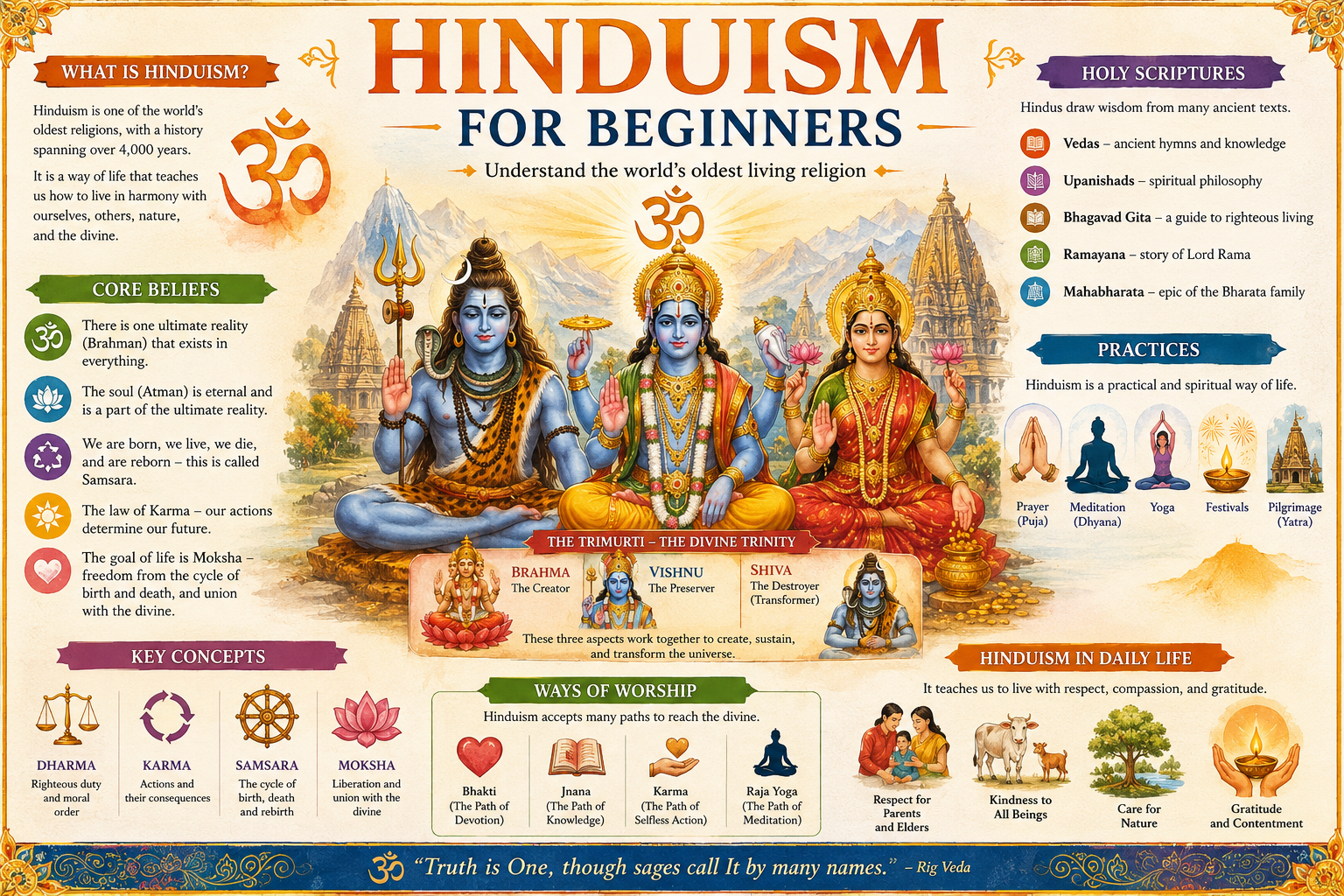
For beginners, Hinduism may seem complex at first because it contains many gods, customs, practices, and traditions. However, its central ideas are actually very meaningful and easy to understand once they are explained clearly. At the heart of Hinduism are ideas such as dharma, karma, samsara, and moksha. These concepts guide how a person should live, how actions affect life, why people are born again, and how spiritual freedom can be achieved.
Hinduism teaches that life is sacred and that every soul has a deeper purpose. It encourages people to live with truth, compassion, self-discipline, devotion, and respect for all forms of life. Some people follow Hinduism through prayer and temple worship, while others focus on meditation, knowledge, service, or yoga. This flexibility is one reason Hinduism has remained alive and meaningful for thousands of years.
Meaning of Hinduism
The word “Hinduism” is commonly used in English to describe the spiritual traditions that developed in the Indian subcontinent over thousands of years. In many cases, followers themselves prefer the term Sanatana Dharma, which means the eternal path or eternal way. This name reflects the idea that truth and righteousness are timeless and not limited to one period or one teacher.
Hinduism includes many schools of thought, but most agree on the importance of living a moral life and seeking spiritual growth. Some Hindus worship one personal god, while others see the divine in many forms. Some people follow rituals strictly, while others focus more on meditation and philosophy. This variety is not a weakness; it is one of the greatest strengths of Hinduism.
In simple words, Hinduism teaches that every person should try to live rightly, understand the deeper purpose of life, and move toward spiritual liberation. It respects different paths because it believes that people have different temperaments, needs, and levels of understanding.
Core Beliefs
Dharma
Dharma is one of the most important ideas in Hinduism. It means duty, righteousness, moral responsibility, and the proper way to live. Dharma is not the same for everyone; it may depend on a person’s age, role in society, family situation, and life stage. For example, a student’s dharma is to learn well, be disciplined, and respect teachers. A parent’s dharma is to care for and guide the family.
Living according to dharma means doing what is right, even when it is difficult. It also means being honest, kind, responsible, and respectful. Hinduism teaches that when people follow dharma, harmony is created in both personal life and society.
Karma
Karma means action and the results of action. Every thought, word, and deed creates consequences. Good actions generally bring positive results, while harmful actions bring suffering or difficulty. Karma is not just punishment or reward; it is a natural law of cause and effect.
This belief encourages people to act carefully and responsibly. A person is not judged only by what they believe, but also by how they behave. In Hindu thought, karma shapes both present life and future lives.
Samsara
Samsara is the cycle of birth, death, and rebirth. According to Hinduism, the soul does not end when the body dies. Instead, it continues its journey through many lives. This cycle continues because of karma and unfulfilled desires.
Samsara can be seen as the soul’s long journey toward understanding and freedom. The purpose of spiritual practice is to rise above this cycle and realize the soul’s true nature.
Moksha
Moksha is liberation from samsara. It is the final goal of spiritual life in Hinduism. Moksha means freedom from ignorance, suffering, and the cycle of rebirth. It is a state of spiritual realization in which the soul understands its unity with the ultimate truth.
Different Hindu traditions explain moksha in different ways. Some describe it as union with God, while others describe it as realization of the self. Either way, moksha is seen as the highest achievement of human life.
Sacred Texts
Hinduism has a rich literature of sacred texts that guide philosophy, devotion, rituals, and daily conduct. These texts are not all treated in the same way. Some are considered revealed scripture, while others are epics, stories, or philosophical teachings.
Vedas
The Vedas are the oldest and most sacred texts in Hinduism. There are four Vedas: Rigveda, Yajurveda, Samaveda, and Atharvaveda. They contain hymns, chants, rituals, prayers, and spiritual wisdom. The Vedas are foundational to Hindu religious thought.
Upanishads
The Upanishads explore deeper philosophical questions about the self, reality, God, and liberation. They move beyond ritual and focus on knowledge and spiritual understanding. Many of Hinduism’s most profound ideas come from the Upanishads.
Bhagavad Gita
The Bhagavad Gita is one of the most famous and loved Hindu scriptures. It is part of the Mahabharata and presents a conversation between Lord Krishna and Arjuna. The Gita teaches duty, devotion, self-control, inner strength, and the importance of doing one’s work without selfish attachment.
Ramayana and Mahabharata
The Ramayana and Mahabharata are great epics that teach moral lessons through stories of divine heroes, kings, struggles, and choices. The Ramayana tells the story of Lord Rama, while the Mahabharata includes the Bhagavad Gita and many lessons about truth, family, duty, and justice.
These texts are important not only as literature but also as sources of values and inspiration for Hindu life.
Gods and Goddesses
Hinduism is often described as a religion with many gods, but this can be misleading if taken too simply. Many Hindus believe that the divine truth is one, though it appears in many forms. Different gods and goddesses represent different aspects of the same ultimate reality.
Brahma
Brahma is known as the creator in the Hindu trinity. He represents the power of creation.
Vishnu
Vishnu is the preserver and protector of the universe. He is believed to take avatars, or divine forms, whenever dharma declines.
Shiva
Shiva is associated with destruction, transformation, meditation, and renewal. He is worshipped as both a powerful yogi and a compassionate god.
Devi
Devi is the goddess in her many forms. She may appear as Durga, Lakshmi, Saraswati, Kali, Parvati, and others. She represents strength, wisdom, prosperity, and creative power.
Other deities
Hinduism also includes worship of Hanuman, Ganesha, Krishna, Rama, and many local and regional deities. Each form has its own meaning and devotional tradition.
Worship and Rituals
Hindu worship can take place in temples, at home, or at sacred places. It often includes offerings of flowers, incense, lamps, fruit, water, and prayers. Devotees may chant mantras, sing bhajans, read scriptures, or meditate.
One of the most common forms of worship is puja, which is a respectful offering to a deity. Puja may be simple or elaborate depending on the family and tradition. It usually begins with cleaning the space, lighting a lamp, and offering devotion with a sincere heart.
Many Hindus also perform aarti, which involves circling a lit lamp before the deity while singing prayers. This symbolizes removing darkness and inviting divine light into life.
Rituals are important because they create a sense of discipline, focus, gratitude, and spiritual connection. However, Hinduism also teaches that inner sincerity matters more than empty ceremony.
Festivals
Festivals are a joyful part of Hindu life. They mark religious events, seasonal changes, and divine stories. Festivals bring families and communities together and strengthen devotion.
Diwali
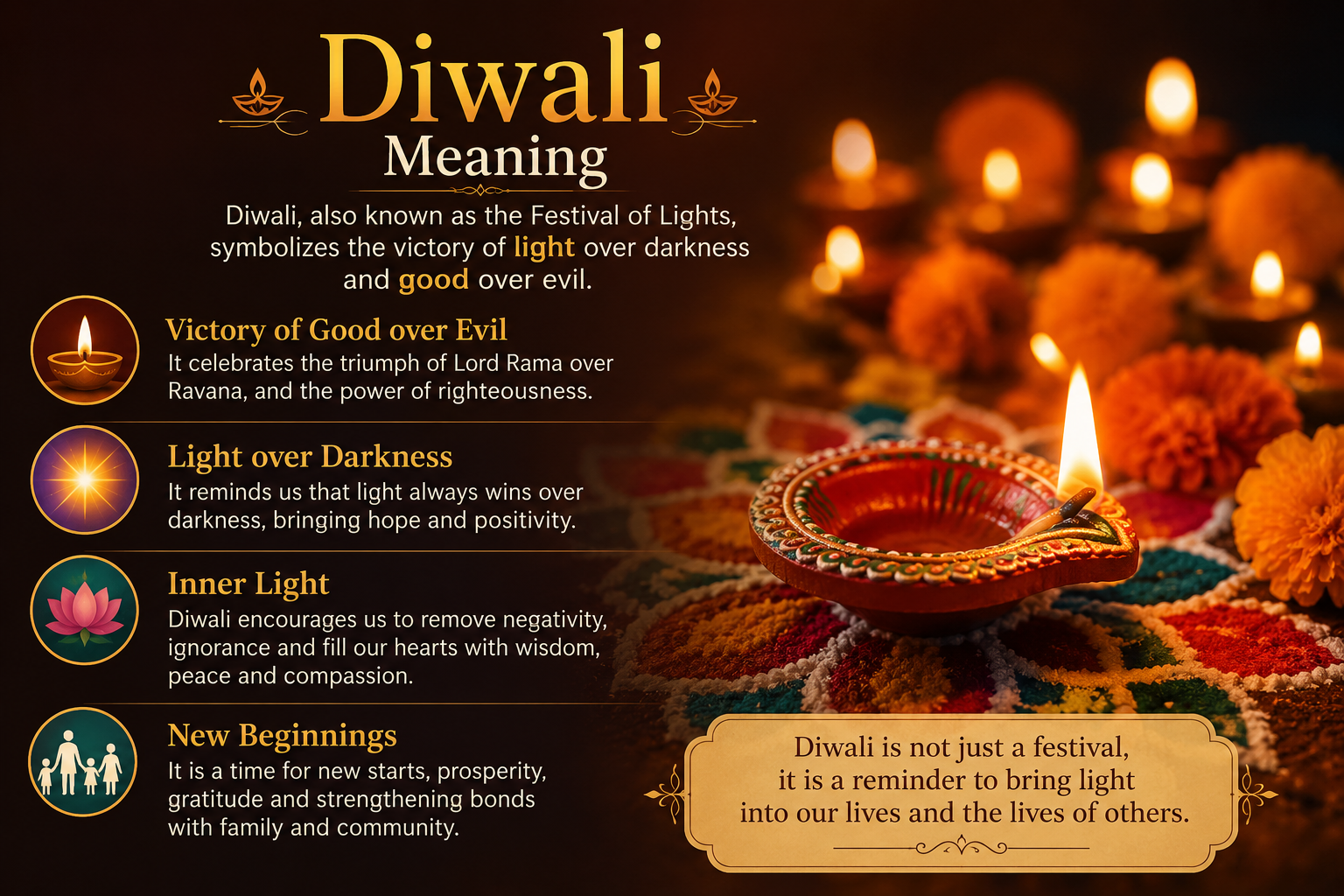
Diwali is the festival of lights. It celebrates the victory of light over darkness and good over evil. People decorate homes, light lamps, exchange sweets, and worship Lakshmi and Ganesha.
Holi
Holi is the festival of colors. It celebrates joy, spring, and the triumph of devotion over negativity. It is also associated with the story of Prahlad and Holika.
Navratri
Navratri is a nine-night festival dedicated to the goddess in her different forms. It is marked by fasting, prayer, dance, and worship.
Janmashtami
Janmashtami celebrates the birth of Lord Krishna. Devotees fast, sing devotional songs, and perform midnight prayers.
Shivaratri
Maha Shivaratri is dedicated to Lord Shiva. Many devotees fast, pray through the night, and visit Shiva temples.
Temples and Pilgrimage
Temples are central to Hindu devotional life. They are not only places of prayer but also spaces for community, learning, ritual, and peace. A temple is often seen as a sacred home for the deity.
Pilgrimage is another important part of Hinduism. Many devotees travel to holy places such as Varanasi, Ayodhya, Mathura, Rameshwaram, Kedarnath, Tirupati, and Prayagraj. These journeys are believed to purify the mind and strengthen spiritual faith.
The act of visiting sacred places helps people step away from ordinary life and focus on their inner journey. For many Hindus, pilgrimage is a powerful way to connect with the divine.
Yoga and Meditation
Yoga is one of Hinduism’s best-known contributions to the world. In its spiritual sense, yoga means union — the union of the individual self with higher truth. It includes physical discipline, breath control, meditation, and ethical living.
Meditation is also an important practice in Hinduism. It helps calm the mind, reduce distraction, and deepen awareness. Many Hindus use meditation to focus on a mantra, a deity, or the breath.
These practices are not only for spiritual experts. Beginners can also benefit from them because they improve concentration, peace of mind, and self-understanding.
Hinduism in Daily Life
For many Hindus, religion is not limited to temples or festivals. It is woven into daily life. People may pray in the morning, light a lamp, read a verse, offer food before eating, or chant a mantra. Respect for parents, teachers, guests, elders, and nature is also an important part of Hindu culture.
Hinduism encourages self-control, gratitude, service, and compassion. It teaches that even ordinary actions can become spiritual if done with sincerity and awareness. This is why Hinduism is often described as a living tradition rather than just a set of beliefs.
Why Hinduism is Unique
Hinduism is unique because it allows many ways of approaching truth. It does not force all followers into one single method. Some people follow devotion, some follow knowledge, some follow service, and some follow meditation. All of these paths are respected.
It is also unique because it connects spirituality with daily life, family, culture, art, music, food, and festivals. It is not separated from life; it is part of life itself.
For beginners, this openness can feel refreshing and meaningful. Instead of demanding one narrow belief, Hinduism invites seekers to explore, reflect, and grow.
Conclusion
Hinduism for beginners becomes easier to understand when it is seen as a spiritual tradition centered on dharma, karma, samsara, and moksha. It teaches respect for life, devotion to the divine, discipline in action, and the search for inner truth. Its sacred texts, gods, festivals, rituals, temples, and pilgrimages all help guide a person toward a meaningful and balanced life.
Although Hinduism is very ancient, it remains deeply relevant today because it speaks to universal human questions: Who am I? Why am I here? How should I live? What is the purpose of life? By exploring these questions, beginners can begin to understand the beauty, depth, and wisdom of Hinduism.