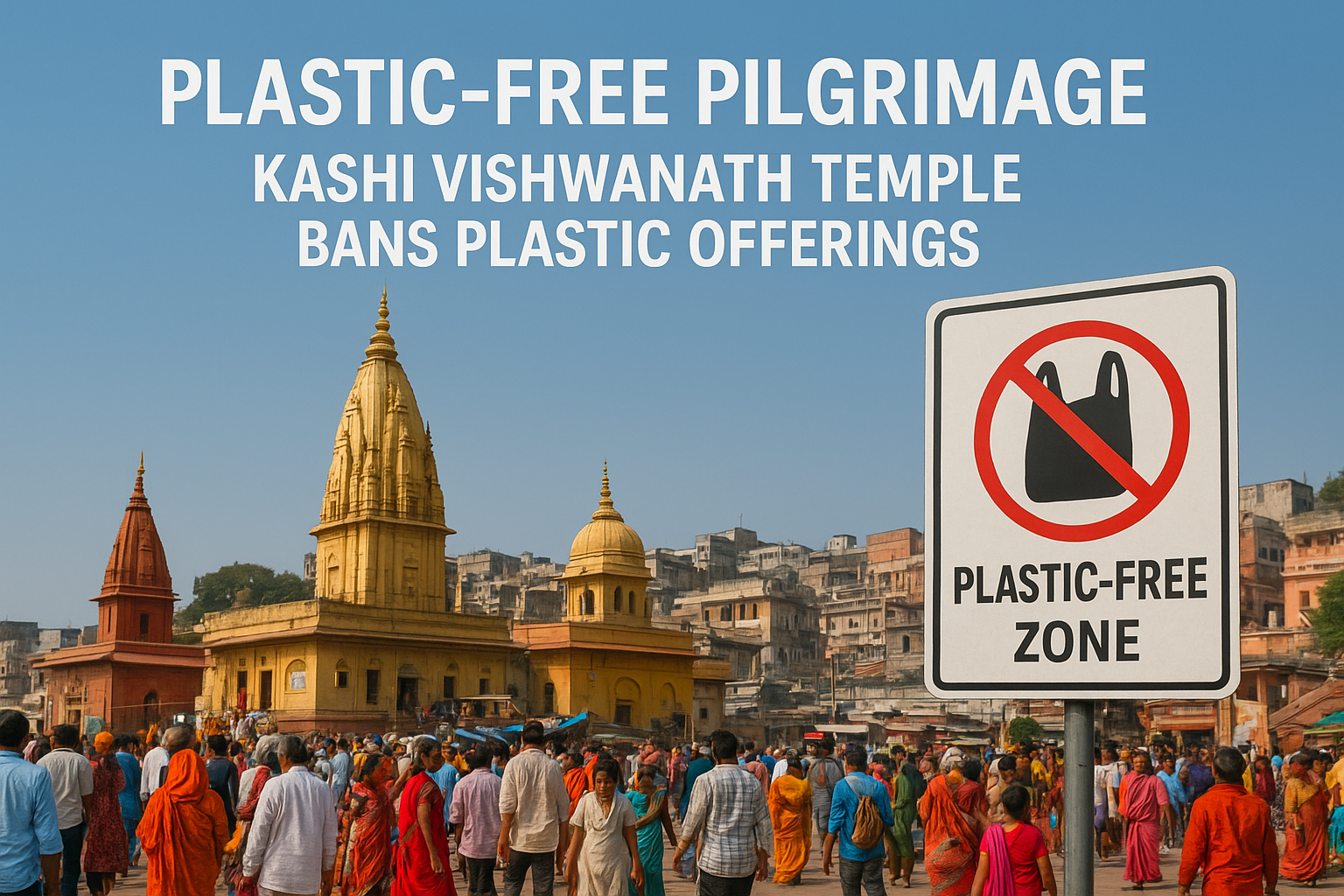
Kashi Vishwanath Temple Bans Plastic Offerings
The Plastic-Free Pilgrimage: Kashi Vishwanath Temple Bans Plastic Offerings initiative marks a revolutionary step in India’s efforts to blend spirituality with sustainability. Nestled in the heart of Varanasi, the Kashi Vishwanath Temple—one of the holiest shrines dedicated to Lord Shiva—has taken a bold decision to prohibit plastic usage in offerings and rituals. This landmark move is not just about environmental protection but also about reviving age-old traditions that were inherently eco-friendly.
By banning single-use plastic items such as carry bags, packaging for prasad, and artificial flower garlands, the temple has set a precedent for other pilgrimage sites across India and the world. This decision resonates deeply with the ancient philosophy of “Prakriti Raksha” (protection of nature) embedded in Hindu scriptures.
The Sacred Legacy of Kashi Vishwanath Temple
Historical Importance
The Kashi Vishwanath Temple, situated on the western bank of the sacred River Ganga, has stood as a beacon of spiritual enlightenment for centuries. Believed to be one of the 12 Jyotirlingas, it attracts millions of devotees each year who come to seek Lord Shiva’s blessings. Its spiritual legacy makes any reform in temple practices influential across the Hindu religious landscape.
Spiritual Relevance in Hinduism
Hindu rituals often involve offerings of flowers, fruits, and other sacred items. Traditionally, these offerings were wrapped in natural materials like banana leaves, jute, or clay pots. However, modern-day commercialization introduced plastic packaging, leading to an imbalance between devotion and environmental responsibility.
Rising Concerns: Plastic Pollution in Religious Spaces
The Problem with Plastic Offerings
While plastic offers convenience, it poses a severe threat when dumped into temple premises or the Ganga. Non-biodegradable plastic clogs drainage systems, suffocates aquatic life, and remains in the environment for centuries.
Impact on River Ganga and Local Ecosystem
The Ganga, revered as a lifeline and goddess in Hinduism, has been suffocated with tons of plastic waste over the years. Devotees often dispose of offerings directly into the river, unknowingly contributing to pollution. This not only harms aquatic biodiversity but also affects millions who depend on the river for drinking water.
The Ban on Plastic Offerings
What Does the Ban Include?
The temple authorities have prohibited the use of plastic bags, thermocol plates, artificial flowers, and synthetic packaging of prasad. Instead, eco-friendly packaging is being promoted.
Authorities Behind the Decision
The decision was taken jointly by the Kashi Vishwanath Temple Trust, the Uttar Pradesh government, and local municipal bodies.
Timeline of Implementation
The ban has been implemented in phases, beginning with awareness campaigns and vendor regulation before strict enforcement came into effect.
Eco-Friendly Alternatives to Plastic
Biodegradable Materials
Items such as paper bags, jute bags, and leaf plates are being encouraged.
Traditional Offerings in Natural Packaging
Clay diyas, banana leaves, and cotton threads are making a comeback as sustainable replacements.
Role of Local Artisans in Promoting Sustainable Products
Handmade jute bags, bamboo baskets, and earthen pots not only reduce plastic dependency but also provide livelihood opportunities for local artisans.
Environmental Benefits of the Plastic-Free Initiative
Protecting River Ganga
The ban on plastic directly addresses one of the most pressing environmental concerns: the health of the River Ganga. Devotees’ offerings, often wrapped in plastic, used to end up floating in the river, choking aquatic life and reducing water quality. By encouraging biodegradable alternatives, the initiative ensures that what goes into the river decomposes naturally without harming its ecosystem.
Improving Waste Management Around the Temple
Every day, thousands of pilgrims visit the temple, resulting in enormous amounts of waste. Earlier, plastic packaging added to overflowing garbage piles, creating sanitation challenges. With the ban, biodegradable waste can be composted, easing the burden on municipal waste management systems.
Long-Term Impact on Climate and Tourism
Plastic contributes heavily to greenhouse gas emissions during its production and incineration. By minimizing its use, the temple indirectly reduces carbon emissions. Furthermore, an eco-friendly pilgrimage experience enhances Varanasi’s reputation as a sustainable tourist destination, attracting environmentally conscious travelers from across the globe.
Social and Cultural Acceptance
Reactions from Pilgrims and Devotees
Most pilgrims have welcomed the decision, recognizing the alignment between spiritual practices and environmental protection. Many see it as a revival of ancient traditions that respected nature. However, some initially resisted, citing inconvenience and higher costs of alternatives.
Priests’ and Temple Administration’s Support
Priests and seers have been at the forefront of promoting the message. By incorporating sustainability into religious discourse, they ensure devotees understand that respecting nature is a form of worship.
Challenges in Behavior Change
Despite widespread support, complete behavioral transformation takes time. Vendors need to adapt, and pilgrims must remember to avoid carrying plastic from outside markets. Continuous awareness campaigns are essential to maintain momentum.
Role of Government and NGOs in Supporting the Initiative
Awareness Campaigns
Posters, announcements, and workshops have been organized to inform devotees about eco-friendly practices. Educational drives in schools and communities surrounding Varanasi have also helped create awareness.
Policy Backing and Monitoring
The Uttar Pradesh government has introduced penalties for violators and rewards for vendors adopting sustainable alternatives. This carrot-and-stick approach has been vital for effective enforcement.
Community Involvement
Local NGOs have partnered with the temple administration to distribute cloth bags and biodegradable packaging to small vendors, ensuring no one is left behind in the transition.
Impact on Varanasi’s Tourism
Promoting Eco-Tourism
The temple’s plastic-free initiative has put Varanasi on the global eco-tourism map. Tour operators are highlighting the sustainable practices, attracting visitors who prioritize responsible travel.
Boosting Local Handicraft Market
Artisans producing jute bags, clay diyas, and bamboo baskets are experiencing a surge in demand. This not only strengthens the local economy but also preserves traditional crafts.
Attracting International Visitors
Foreign tourists, particularly from environmentally progressive nations, view this initiative as a sign of India’s commitment to sustainability. This enhances Varanasi’s cultural prestige on a global scale.
Challenges and Criticism
Resistance from Vendors
Some vendors argue that eco-friendly packaging is more expensive and reduces profit margins. Continuous government subsidies may be needed until production scales up.
Practical Issues in Enforcement
Ensuring compliance among millions of visitors is challenging. Temple authorities must deploy security personnel and volunteers to monitor the entry of plastic items.
Need for Continuous Monitoring
Without regular checks, old habits may resurface. Authorities must remain vigilant to sustain long-term success.
Future Roadmap: Towards a Sustainable Pilgrimage Model
Expansion to Other Temples and Pilgrimage Sites
If successful, this model can be replicated in other major pilgrimage centers like Vaishno Devi, Kedarnath, and Jagannath Puri.
Integration with Smart City Varanasi
As Varanasi undergoes modernization under the Smart City project, the plastic-free initiative complements broader goals of sustainable urban development.
Role of Technology in Waste Management
Smart bins, recycling units, and waste-tracking apps can ensure efficient management of biodegradable waste around the temple complex.
How Pilgrims Can Contribute to Plastic-Free Pilgrimage
Carrying Reusable Containers
Pilgrims are encouraged to carry steel water bottles, cloth bags, and reusable containers for offerings.
Choosing Eco-Friendly Offerings
Flowers, fruits, and natural incense sticks wrapped in leaves or paper are preferable.
Spreading Awareness Among Fellow Devotees
Word-of-mouth remains powerful. Devotees who embrace the change can inspire others by setting an example.
Expert Opinions on Plastic-Free Pilgrimage
Environmentalists’ Perspectives
Experts argue that this initiative could become a model for balancing faith with environmental responsibility. They emphasize that reducing plastic pollution in pilgrimage sites will directly benefit millions living along the Ganga.
Religious Scholars’ Views
Scholars highlight that Hinduism traditionally promotes living in harmony with nature. They argue that banning plastic is not a modern innovation but a return to authentic spiritual practices.
Local Community Leaders’ Insights
Community leaders in Varanasi believe the initiative boosts civic pride and strengthens the city’s identity as a center of both spirituality and sustainability.
Conclusion: A Divine Journey Towards Sustainability
The Plastic-Free Pilgrimage: Kashi Vishwanath Temple Bans Plastic Offerings initiative is more than an environmental reform—it’s a spiritual renaissance. By eliminating plastic from its sacred practices, the temple not only safeguards the River Ganga but also rekindles age-old traditions that respected nature.
This step bridges faith and sustainability, showing that true devotion means protecting creation itself. As pilgrims carry their prayers in eco-friendly offerings, they contribute not just to their spiritual journey but also to the preservation of our planet.
Kashi Vishwanath has lit a torch that can guide other temples, cities, and even nations towards a sustainable future. Indeed, this is not just a ban—it’s a blessing for generations to come.