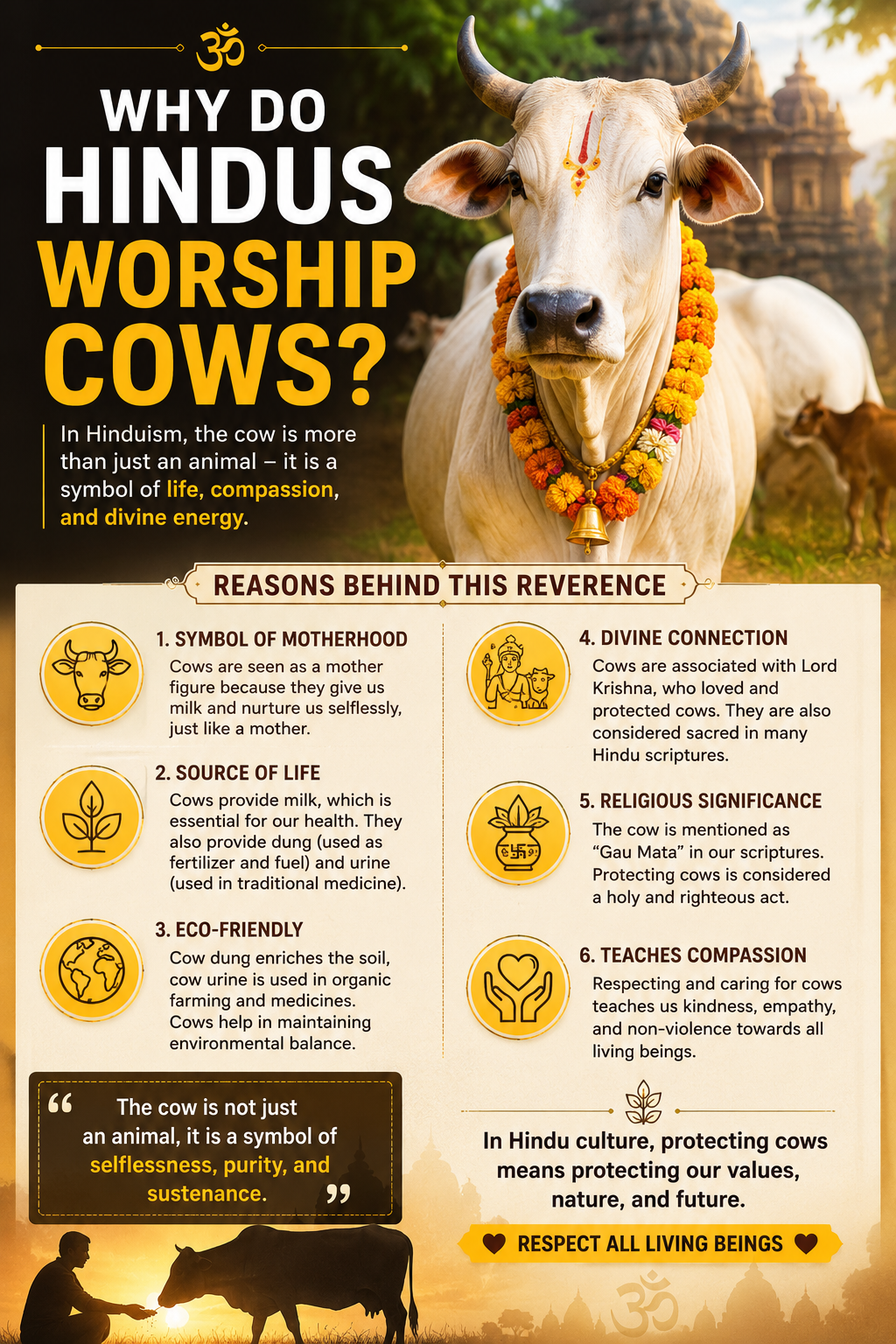
Cows hold a very special place in Hinduism and are respected as sacred animals. For many Hindus, the cow is not just a farm animal but a symbol of life, motherhood, abundance, and kindness. The respect shown to cows comes from a combination of religious belief, cultural tradition, and spiritual value. In Hindu society, the cow is often seen as a gentle giver of nourishment, especially because it provides milk and other useful products without taking life. That is one reason why it is called Gau Mata, or Mother Cow.
The idea of worshiping cows is connected with the broader Hindu principle of ahimsa, or non-violence. Since the cow is calm, useful, and nurturing, it is regarded as a living symbol of compassion. Hindus believe that protecting and caring for the cow reflects respect for all life. This makes cow reverence not only a religious practice but also a moral one.
Sacred meaning of the cow
In Hindu thought, the cow represents motherhood and selfless giving. Just as a mother nourishes her child, a cow provides milk and other products that sustain human life. Because of this, the cow is seen as a symbol of generosity and unconditional care. Many Hindus believe that harming such an animal would go against dharma, or righteous living.
The cow is also associated with purity and auspiciousness. It is often welcomed in religious ceremonies and household rituals. In villages and temples, cows are treated with great affection and respect. This sacred status has been passed down through generations and remains important even in modern times.
Connection with Hindu deities
The cow is closely connected with several Hindu gods and divine traditions. Lord Krishna, one of the most beloved deities in Hinduism, is often shown as a cowherd and is deeply associated with cows. His early life in Vrindavan among cows and cowherds makes the animal especially dear to his devotees. Because of this association, many people naturally express devotion to cows as part of their devotion to Krishna.
The cow is also linked with Lord Shiva, whose vehicle, Nandi the bull, is sacred in its own right. In broader Hindu culture, cattle are often associated with prosperity, fertility, and divine blessing. This connection with the divine strengthens the religious respect given to cows.
Cow in daily life
Historically, cows have played an important role in Indian households and agriculture. They provided milk, ghee, butter, dung for fuel, and support in farming life. In traditional communities, cows were valuable to daily survival, and their care became part of family duty. This practical importance added to their sacred status.
Even today, many Hindu families continue to respect cows by feeding them, avoiding harm, and offering prayers in their presence. During festivals or special occasions, cows may be decorated and worshiped as a sign of gratitude. This shows that cow reverence is not only symbolic but also part of lived tradition.
Non-violence and compassion
One of the deepest reasons Hindus worship cows is the principle of ahimsa. Ahimsa teaches that all life should be respected and that violence should be avoided whenever possible. Since the cow is seen as calm, harmless, and useful, it becomes a powerful example of this principle.
By honoring the cow, Hindus express their commitment to compassion and restraint. The practice reminds people to live gently and responsibly. It is a spiritual teaching that goes beyond the animal itself and points toward a larger ethic of kindness toward all beings.
Cultural importance
Cows are not only sacred in religion but also deeply woven into Indian culture. They appear in festivals, prayers, stories, songs, and rural life. Their presence in Indian civilization for thousands of years has made them a symbol of continuity and tradition.
For many Hindus, respecting the cow is part of respecting their heritage. It connects present-day life with ancient values and reminds people of a simpler, more harmonious way of living. That is why the cow continues to inspire devotion, respect, and protection.
Conclusion
Hindus worship cows because they see them as sacred symbols of motherhood, generosity, purity, and non-violence. The cow is respected not only for its usefulness but also for its spiritual and cultural meaning. Through the cow, Hinduism expresses gratitude for life, compassion for living beings, and reverence for the divine in nature