What Is Diwali?
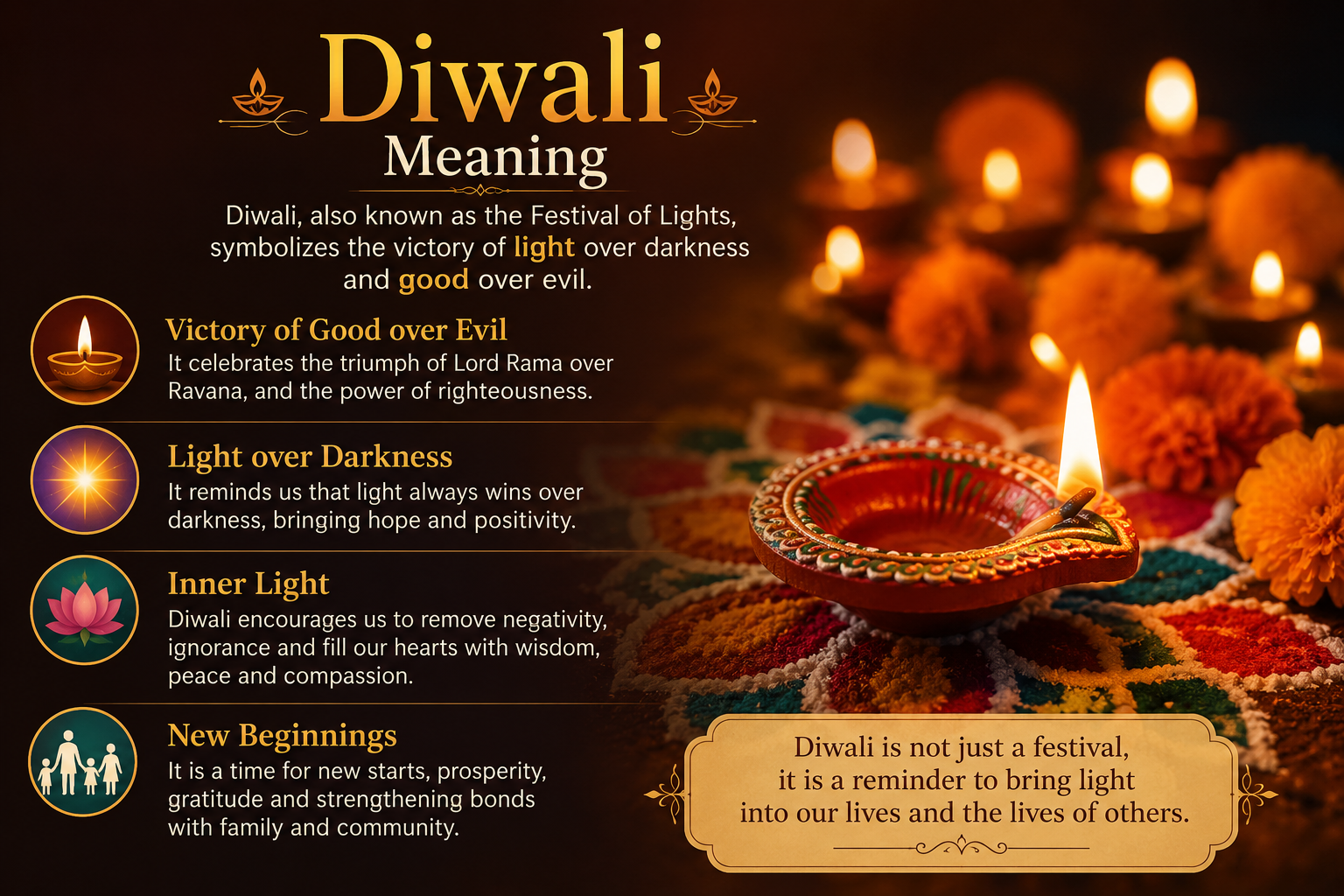
Diwali (also spelled Divali, Deepavali, or Dipavali) is India’s most important and biggest festival of the year. It is popularly known as the “Festival of Lights” because millions of people light oil lamps (diyas), candles, and colorful lights throughout their homes, streets, and public places.
Diwali is celebrated by Hindus, Sikhs, Jains, and Buddhists across India and more than 100 countries worldwide.
The festival falls between mid-October and mid-November every year, on the 15th day of the month Kartik in the Hindu calendar.
The Meaning of Diwali
1. Word Origin – Sanskrit Roots
The word “Diwali” comes from the ancient Indian language Sanskrit:
- Deepavali = Diwali (original Sanskrit word)
- Deepa (दिप) = Lamp or Light
- Vali (wali) = Row or String
- Deepavali = “Row of lights” or “Row of lamps”
When people light rows of lamps during Diwali, they are literally creating a “deepavali” – a beautiful row of lights that illuminates the darkness.
2. Symbolic Meaning – What Diwali Represents
Diwali is not just a celebration of lights; it carries deep spiritual and philosophical meaning:
| Symbolism | Meaning |
|---|---|
| Light over Darkness | Inner light protects from spiritual darkness |
| Good over Evil | Victory of good forces over evil forces |
| Knowledge over Ignorance | Wisdom triumphs over ignorance |
| Hope for Future | Celebration of hope for the following year |
| New Beginnings | Fresh start, auspicious day to launch businesses |
| Inner Light | Rejoice in your own spiritual light |
For all religions that celebrate Diwali, the central message is the same: victory of light over darkness, good over evil.
Diwali Stories Different Religions Celebrate Different Ways
One of the most beautiful things about Diwali is that different religious groups celebrate it for different reasons, but all share the same core message of light triumphing over darkness.
For Hindus: The Return of Lord Rama
The most popular story behind Diwali is from the ancient Hindu epic Ramayana:
Lord Rama (also spelled Ram) was:
- The Prince of Ayodhya (a kingdom in northern India)
- A hero and avatar of God Vishnu
- Fulfilled 14 years of exile (living in forests)
After completing his exile, Rama:
- Defeated the demon king Ravana (who lived in Lanka/Sri Lanka)
- Ravana had kidnapped Rama’s wife Sita
- Rama fought a great battle and won
- Returned to Ayodhya with Sita and his brother Lakshmana
When Rama returned to his kingdom after 14 years:
- The people of Ayodhya welcomed him by lighting oil lamps
- They placed rows of lamps on the streets and at every home
- This initiated the tradition of lighting lamps during Diwali
This is why Diwali is celebrated as the victory of good (Rama) over evil (Ravana).
For Southern Indian Hindus:
- Diwali celebrates the defeat of demon Narakasura by Lord Krishna
- Krishna killed the evil demon and freed people from his tyranny
Other Hindu Beliefs:
- Diwali honors Goddess Lakshmi (goddess of wealth, prosperity, and fortune)
- Diwali also honors Lord Ganesha (god of good luck, wisdom, and remover of obstacles)
- Many Hindus worship Lakshmi and Ganesha together during Diwali
- Worship is believed to bring peace, prosperity, and wealth
For Jains: Spiritual Awakening of Lord Mahavira
For Jains, Diwali marks the day when:
- Lord Mahavira (the last and 24th Jain Tirthankara) attained nirvana (spiritual awakening)
- This was the day of complete enlightenment and liberation
- Mahavira’s soul was freed from the cycle of birth and death
For Jains, Diwali is a day of spiritual awakening.
For Sikhs: End of Guru Hargobind Ji’s Imprisonment
For Sikhs, Diwali celebrates:
- The end of imprisonment of Guru Hargobind Ji (6th Sikh Guru)
- Guru Hargobind Ji was imprisoned by Emperor Jahangir
- He escaped from prison and brought 52 other princes with him to freedom
- This represents freedom from tyranny and struggle for liberty
For Sikhs, Diwali marks the end of Guru Hargobind Ji’s imprisonment.
For Buddhists: Emperor Ashoka’s Journey
For Buddhists, Diwali marks:
- The beginning of Emperor Ashoka’s journey with Buddhism
- Ashoka became a great Buddhist ruler
- Promoted peace, non-violence, and Buddhism across India
For Buddhists, Diwali marks the beginning of Emperor Ashoka’s journey with Buddhism.
How Is Diwali Celebrated? – Five-Day Festival
Diwali is not just one day; it is a five-day celebration with each day having its own significance and traditions.
Day 1: Dhanteras (Dhan Teras)
When: 13th day of the dark lunar month (Kartik)
Celebrations:
- People buy gold, silver jewellery, or utensils (considered lucky)
- Worship of God (Lakshmi and Ganesha)
- Clean homes and decorate with lights
- Make diyas (oil lamps) and place them everywhere
- First day of the festival
Significance:
Day 2: Naraka Chaturdashi (Choti Diwali)
When: 14th day of Kartik
Celebrations:
- Death of demon king Narakasura
- Early morning oil bath (considered cleansing)
- Lighting diyas at home and temples
- Smaller celebration before main Diwali
Significance:
Day 3: Diwali (Main Day)
When: 15th day of Kartik (Amavasya – no moon night)
This is the MAIN DAY of Diwali:
Celebrations:
- Worship of Lakshmi and Ganesha (prayers and puja)
- Lighting rows of diyas outside homes and shops
- Fireworks and firecrackers
- Family feasting with special Diwali sweets
- Exchange of gifts with family and friends
- Decorating homes with colorful lights and rangoli
- Wearing new clothes
- Company parties and celebrations
- Starting new business (considered very auspicious)
Significance:
- Return of Lord Rama to Ayodhya
- Victory of good over evil
- Goddess Lakshmi brings wealth and fortune
Day 4: New Year (Padva or Annakut)
When: 1st day of bright lunar month (Kartik)
Celebrations:
- Start of Vikrama calendar year (new year for many)
- Exchange of gifts with spouse
- Balance sheets for business (new year accounting)
- Visiting family and friends
- Special prayers and celebrations
Significance:
- Marks New Year for many Hindus
- Fresh start and beginning
Day 5: Bhai Dooj (Bhaiya Dooj)
When: 2nd day of Kartik
Celebrations:
- Brothers and sisters celebrate their bond
- Sisters apply tilak (mark) on brother’s forehead
- Brothers give gifts to sisters
- Family gatherings and meals
- Similar to Raksha Bandhan but after Diwali
Significance:
Why Diwali Is Important – Cultural & Spiritual Significance
Diwali is considered the most important holiday in India. Here’s why:
1. Spiritual Victory
- Light over darkness – Always choose good over evil
- Knowledge over ignorance – Seek wisdom and truth
- Inner light – Each person has a spiritual light within
2. Cultural Unity
- Everyone celebrates together – Hindus, Sikhs, Jains, Buddhists
- Transcends religious boundaries – Different beliefs, same message
- Family gathering – People travel to be with family
3. Prosperity & Wealth
- Honors Goddess Lakshmi – Brings wealth and fortune
- Lucky day – Considered auspicious to start business
- Exchange gifts – Share prosperity with others
4. Hope & New Beginnings
- Celebration of hope for the following year
- Fresh start – New year, new opportunities
- Auspicious day to launch new businesses
5. Global Celebration
- Celebrated worldwide – 100+ countries
- Millions celebrate across the globe
- Official holiday in many countries
- Cultural diplomacy – World leaders send Diwali greetings
Diwali Traditions & Customs
1. Lighting Diyas (Clay Lamps)
- Diyas = small clay lamps filled with oil
- Lit and placed outside homes, shops, temples
- Symbolizes the inner light protecting from darkness
2. Fireworks & Firecrackers
- Colorful fireworks at night
- Joy and celebration
- Light and sound illuminating the darkness
3. Decorating Homes
- Colorful lights on houses
- Rangoli – colorful patterns on floor with rice, flowers, or colors
- Flowers and garlands
- Clean and decorated homes welcome prosperity
4. Feasting & Sweets
- Special Diwali sweets (mithai) – gujiya, laddu, barfi
- Family meals with traditional dishes
- Sharing sweets with neighbors and friends
- Treats for children
5. Gift Exchange
- Giving gifts to family, friends, employees
- Gourmet boxes, clothes, jewellery
- Cash gifts (considered lucky)
- Corporate gifts from companies
6. Prayer & Worship (Puja)
- Lakshmi Puja – worship Goddess of wealth
- Ganesha Puja – worship God of good luck
- Family prayers together
- Temple visits
7. New Clothes
- Wearing new traditional clothes
- Sarees, kurta-pajamas, dresses
- Fresh and clean appearance
Famous Diwali Quotes & Teachings
Complete Summary: Diwali Meaning
- Festival of Lights – India’s biggest holiday
- Means “row of lights” – From Sanskrit word Deepavali
- Celebrates victory – Good over evil, light over darkness
- 5-day festival – Dhanteras → Naraka Chaturdashi → Diwali → New Year → Bhai Dooj
- Honors Goddess Lakshmi – For wealth and prosperity
- Honors Lord Ganesha – For good luck and wisdom
- Celebrated by – Hindus (Rama’s return), Jains (Mahavira’s nirvana), Sikhs (Guru Hargobind’s freedom), Buddhists (Ashoka’s journey)
- Time – October or November every year
- Symbol – Lighting diyas (oil lamps) in rows
- Message – Light over darkness, good over evil, knowledge over ignorance