
Introduction
The story of Lord Ganesha and the Moon is one of the most popular and meaningful tales in Hindu mythology. It is often heard during festivals like Ganesh Chaturthi, and it carries a deep message about pride, respect, and consequences of behavior.
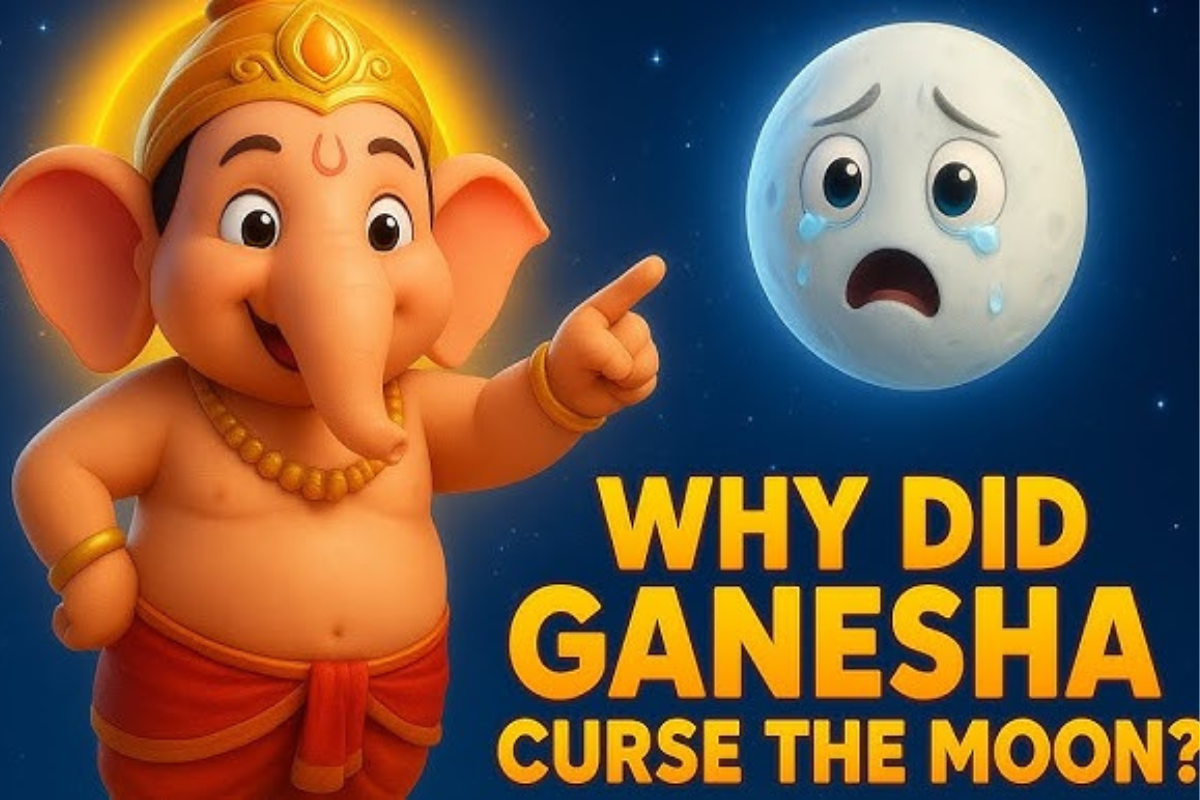
Many people wonder: Why did Lord Ganesha curse the Moon? What was the reason behind it, and what lesson does this story teach us?
In this article, we will explore the complete story in simple language, its spiritual meaning, and why the Moon is still associated with this curse in Hindu beliefs.
Who is Lord Ganesha?
Lord Ganesha is one of the most loved deities in Hinduism. He is known as the remover of obstacles and the god of wisdom, success, and new beginnings. People worship him before starting any new work.
Ganesha is easily recognized by his elephant head and human body. His stories are full of wisdom and life lessons that guide people to live better and more mindful lives.
Who is the Moon (Chandra Dev)?
In Hindu mythology, the Moon is known as Chandra Dev. He is considered a beautiful and graceful god who rules the night sky. However, in this story, Chandra Dev becomes proud of his beauty, which leads to the conflict with Lord Ganesha.
The Story: Why Did Ganesha Curse the Moon?
The Beginning of the Incident
Once upon a time, Lord Ganesha was returning home after enjoying a large feast. As he was riding his vehicle (the mouse), he suddenly fell down.
When this happened, the Moon (Chandra Dev) was watching from the sky. Instead of helping or ignoring, he laughed at Ganesha. The Moon made fun of Ganesha’s appearance and the way he fell.
Ganesha Feels Disrespected
Lord Ganesha, who is known for wisdom and calm behavior, felt deeply insulted by the Moon’s behavior. He believed that laughing at someone’s appearance, especially during an accident, was disrespectful and arrogant.
The Curse
Angered by the Moon’s arrogance, Lord Ganesha cursed him:
The Moon would lose its beauty and brightness, and no one would be able to look at it on certain days.
This curse meant that the Moon would disappear from the sky for a short period every month, which we now understand as the lunar phases (Amavasya and waxing/waning cycles).
Why Did Ganesha React So Strongly?
Lord Ganesha’s reaction teaches an important lesson. In Hindu belief, Ganesha is not just a god of wisdom but also a symbol of justice and humility.
The Moon’s mistake was not just laughing—it was arrogance and disrespect toward someone who was in a vulnerable moment.
The curse was given to show that:
- Pride can lead to downfall
- Mocking others is wrong
- Every action has consequences
The Moon’s Apology
After realizing his mistake, Chandra Dev felt ashamed and apologized to Lord Ganesha. He requested forgiveness and asked for relief from the curse.
Ganesha, being kind and compassionate, softened the curse. He modified it so that the Moon would not be completely destroyed but would gradually wax and wane instead.
This is why the Moon appears full on some nights and disappears on others.
On Ganesh Chaturthi, why do we avoid seeing the moon?
There is a traditional belief that seeing the Moon on Ganesh Chaturthi is inauspicious.
This comes directly from this story. It is believed that if someone looks at the Moon on this day, they may face false accusations or misunderstandings.
This belief reminds people of:
- Staying humble
- Avoiding ego
- Respecting traditions
Scientific Connection (Modern Understanding)
While this is a mythological story, it also connects beautifully with science.
We know that:
- The Moon does not produce its own light
- It goes through phases due to its position relative to the Earth and Sun
- These phases create waxing and waning cycles
The story symbolically explains these natural lunar changes in a spiritual way.
Spiritual Meaning of the Story
1. Humility is Important
Even powerful beings like the Moon are shown consequences for arrogance. It teaches us to stay humble.
2. Respect Others
Laughing at someone’s misfortune is considered wrong in all cultures.
3. Karma (Action and Result)
Every action has a reaction. Good actions bring good results, and disrespect leads to consequences.
4. Forgiveness is Powerful
Even after being angry, Ganesha forgave the Moon, showing that forgiveness is a divine quality.
Lessons We Can Learn in Daily Life
This story is not just religious; it is deeply practical for modern life.
- Do not judge people by appearance
- Avoid mocking others in difficult situations
- Stay humble even when you are successful
- Learn to forgive when someone apologizes sincerely
- Understand that actions have consequences
Why This Story Is Still Popular in 2026
Even today, this story is widely shared during festivals and in spiritual discussions because it teaches timeless values.
In a fast-moving digital world where people often judge others quickly on social media, this story feels even more relevant. It reminds us to:
- Think before speaking
- Be kind online and offline
- Respect everyone equally
FAQs About Ganesha and the Moon Story
Q1. Why did Ganesha curse the Moon?
Because the Moon laughed at Lord Ganesha when he fell from his vehicle, showing arrogance and disrespect.
Q2. What was the curse of Ganesha on the Moon?
The Moon was cursed to lose its full brightness and go through phases of waxing and waning.
Q3. Is it true that we should not see the Moon on Ganesh Chaturthi?
According to tradition, seeing the Moon on Ganesh Chaturthi is considered inauspicious due to this mythological story.
Q4. What is the moral of this story?
The moral is to remain humble, respect others, and avoid arrogance.
Conclusion
The story of why Ganesha cursed the Moon is not just a mythological tale—it is a powerful lesson about humility, respect, and behavior. It shows that even divine beings value kindness and humility over pride.
In simple terms, the Moon’s mistake was arrogance, and Ganesha’s response teaches balance between justice and forgiveness.
This timeless story continues to inspire millions of people and remains relevant even in 2026, reminding us to live with respect, wisdom, and kindness in everyday life.