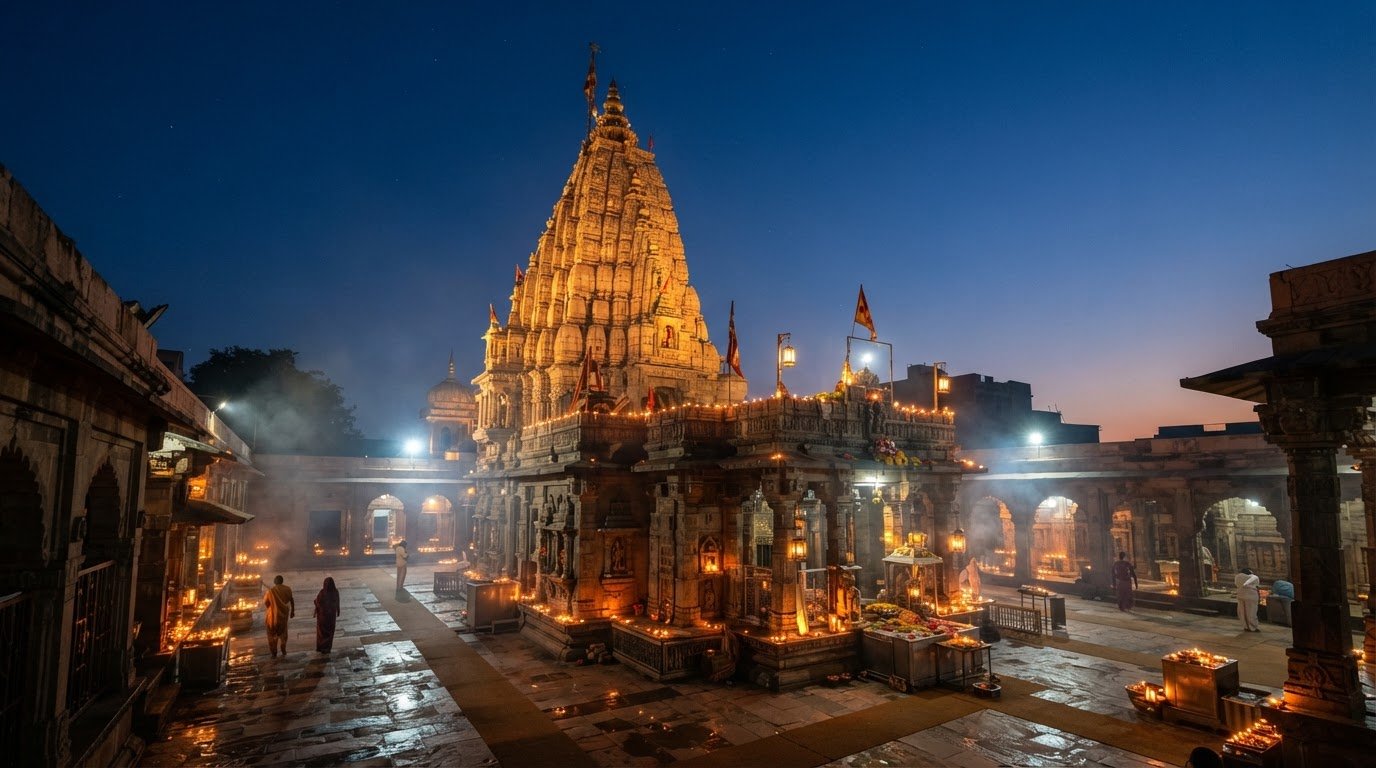
Mahakala is one of the most revered forms of Lord Shiva, worshipped as the supreme power beyond time, change and death. In the ancient city of Ujjain in Madhya Pradesh, this divine presence is honoured at Shri Mahakaleshwar Jyotirlinga, one of the twelve Jyotirlingas of India. For devotees, a visit to Mahakal is not simply a temple visit; it is an opportunity to pause, pray and reflect on the timeless nature of life.
Mahakala: The Lord Beyond Time
The Sanskrit word “Mahakala” is commonly understood through two words: Maha, meaning great, and Kala, meaning time. In Shaiva tradition, Mahakala represents Shiva as the one who stands beyond the limits of time and the cycle of creation, preservation and dissolution. The name is also associated with Shiva’s protective and transformative power. Devotees remember Mahakal in moments of gratitude, uncertainty and difficulty, seeking courage, wisdom and inner steadiness.
Ujjain has a special place in this tradition. The city, historically known as Ujjayini and Avanti, has long been an important centre of religion, learning, astronomy and culture. The Mahakaleshwar shrine is woven into the spiritual identity of the city, and local devotion often describes Lord Mahakal as Ujjain’s guardian and sovereign deity.
Shri Mahakaleshwar Jyotirlinga in Ujjain
Shri Mahakaleshwar Temple is located in Ujjain, Madhya Pradesh, near the sacred Rudra Sagar area. It is counted among the twelve Jyotirlingas dedicated to Lord Shiva. The temple’s central shrine is distinctive because the Mahakal lingam is worshipped as swayambhu—self-manifested according to the faith and tradition of devotees. It is also known as Dakshinamurti because the principal lingam faces south, a feature that makes this Jyotirlinga especially distinctive in the traditional list of twelve.
The Mahakal lingam is situated on the lower level of the temple complex. The shrine of Omkareshwar is above it, while the Nagchandreshwar shrine is on the upper level and is traditionally opened to devotees on Nag Panchami. The temple complex also contains shrines and sacred spaces associated with several forms of Shiva and other deities. Follow the temple administration’s directions on the day of your visit, as access arrangements can change during festivals, renovation work or large gatherings.
The Legend of Mahakal
Several sacred traditions explain the manifestation of Mahakaleshwar at Ujjain. A well-known account associated with the Shiva Purana tells of the city being threatened by the demon Dushana. The people, including devoted worshippers of Shiva, prayed for protection. In response to their devotion, Lord Shiva appeared in a powerful form, defeated the threat and remained at Ujjain as Mahakaleshwar.
Another popular telling includes the devotion of a young boy named Shrikhar and the prayers of a learned priest, often identified as Vriddhi. Their faith is said to have joined the prayers of the people of Ujjain. The details of sacred narratives can vary across retellings and regional traditions; they are best understood as religious accounts that express the enduring bond between Mahakal and the people of the city.
A Temple with a Long and Layered History
The exact date when the first shrine at this location was built is not firmly established. The official temple history describes the site as ancient and records references to its importance across different historical periods. The temple endured destruction and rebuilding, and its present form reflects layers of architectural and devotional history. The medieval period brought major upheaval; the temple structure was damaged during the invasion of Ujjain by Iltutmish in 1235 CE, according to the temple’s historical account.
In the eighteenth century, the Maratha revival of the region brought renewed patronage to the shrine. The temple’s official history credits Ramchandra Baba Shenvi, an administrator associated with the Scindia period, with an important role in reconstructing the temple. Today’s complex therefore represents not one uninterrupted building project, but centuries of worship, rebuilding, patronage and community memory.
Bhasma Aarti: A Distinctive Daily Ritual
One of the best-known traditions of Mahakaleshwar is the Bhasma Aarti, performed in the early hours of the morning. During this ritual, the Jyotirlinga is ceremonially adorned with sacred ash in accordance with temple tradition. The ritual carries deep symbolic meaning for devotees: ash reminds worshippers of the impermanence of worldly forms and the eternal nature attributed to Shiva. The ceremony is solemn and highly sought after, so visitors should plan ahead and follow the current instructions issued by the temple administration.
The temple’s published schedule lists Bhasma Aarti from 4:00 AM to 6:00 AM in both seasonal schedule columns. Other aarti timings vary by the Hindu calendar period. Timings, entry arrangements and booking availability may be revised for special days, festivals, crowd management or administrative reasons. Always confirm the latest information on the official temple website before travelling.
Aarti Timings and Darshan Planning
The official schedule currently publishes the following aarti windows. These are planning references, not a guarantee that every ritual or entry arrangement will remain unchanged on your visit date.
| Aarti | Published timing |
|---|---|
| Bhasma Aarti | 4:00 AM – 6:00 AM |
| Dadyodak Aarti (Bal Bhog) | 7:00 AM – 7:45 AM or 7:30 AM – 8:15 AM, depending on the seasonal schedule |
| Bhog Aarti | 10:00 AM – 10:45 AM or 10:30 AM – 11:15 AM, depending on the seasonal schedule |
| Sandhya Aarti | 7:00 PM – 7:45 PM or 6:30 PM – 7:15 PM, depending on the seasonal schedule |
| Shayan Aarti | 10:30 PM – 11:00 PM |
For the latest schedule, consult the official Mahakaleshwar temple timings page. Arrive with enough time for security checks and queues. On Mondays, weekends, Shravan month, Mahashivratri and other major occasions, the number of pilgrims can rise considerably.
How to Book Bhasma Aarti
Bhasma Aarti booking is managed through the temple’s official online services. Use the official website rather than links sent by unknown agents or social-media accounts. Booking windows, eligibility, available dates, document requirements and entry rules can change, so rely on the live booking page for the instructions that apply to your selected date.
- Open the official Bhasma Aarti service page.
- Review the current advance or Tatkal booking option and the dates displayed by the temple.
- Sign in using the process shown on the official portal and enter the requested devotee details accurately.
- Read the rules, identity requirements and reporting instructions before confirming.
- Save the confirmation or ticket and carry the required original identity document on the day of entry.
Do not assume that a booking is confirmed merely because a payment has been made. Check that the official portal has generated a valid confirmation or ticket. Avoid paying intermediaries who promise guaranteed entry, special access or passes through private messages. For help with temple services, the official site lists the toll-free helpdesk number 1800-233-1008 and landline numbers 0734-2550563 and 0734-2559277.
Other Darshan, Pujan and Temple Services
In addition to Bhasma Aarti, the temple’s official services portal lists options such as Sheeghra Darshan, Pujan and Abhishek booking, Sandhya Aarti, Shayan Aarti and donations. Availability and terms are controlled by the temple administration. Read the details on the relevant service page before making a payment, and keep the receipt or confirmation for reference.
Official services: Temple online services · Temple help and contact details.
Mahakal Lok and the Wider Temple Experience
A visit to Ujjain can include more than the main sanctum. Mahakal Lok, the large visitor and pilgrimage corridor developed around the Mahakaleshwar area, offers an expansive approach to the temple precinct, with artistic representations and spaces designed for pilgrims. Visitors should allow time for walking, security checks and crowd movement. Follow marked routes and local instructions, especially during peak pilgrimage periods.
Ujjain is also known for its sacred riverfront along the Kshipra, its historic ghats and many temples. Pilgrims often combine their Mahakal visit with other religious and cultural places in the city. Plan a realistic itinerary rather than trying to cover every site in a short period.
How to Reach Mahakaleshwar Temple
Ujjain is connected by rail and road to several major cities in Madhya Pradesh and other parts of India. Ujjain Junction is the main railway station serving the city. The nearest major airport is Devi Ahilyabai Holkar Airport in Indore; the road journey from Indore to Ujjain is commonly around 55–60 kilometres, depending on the route and starting point. Travel times can vary with traffic and road conditions.
By Train
Ujjain Junction has rail connections with cities including Indore, Bhopal, Ratlam, Kota, Delhi and other regional and national destinations. Check the current railway timetable and book tickets through authorised railway channels.
By Air
Fly to Devi Ahilyabai Holkar Airport in Indore and continue to Ujjain by road. Allow extra time for airport transfers, traffic and the temple’s entry process.
By Road
Ujjain is accessible by road from Indore, Bhopal and other cities in Madhya Pradesh. Buses, taxis and private vehicles are commonly used. During major festivals, traffic diversions and parking restrictions may apply; follow the latest local police and administration advisories.
Practical Tips for Devotees
- Check the official temple website for current darshan timings, aarti schedules and booking rules before leaving.
- Carry a valid identity document and any booking confirmation required for your chosen service.
- Wear comfortable, respectful clothing and footwear that is easy to remove where required.
- Follow instructions about mobile phones, cameras, bags and other restricted items; rules can differ by area and event.
- Keep drinking water and basic essentials with you, while respecting security restrictions inside the complex.
- Allow additional time during Shravan, Mahashivratri, Mondays and holiday periods.
- Do not block queues or photography-free areas, and be considerate of elderly devotees and families.
- Use official counters and portals for tickets, donations and pujan services.
Festivals and Important Occasions
Mahashivratri is among the most significant occasions at Mahakaleshwar, when worship continues through the night and large numbers of devotees visit Ujjain. The month of Shravan is also especially important, with special worship and the traditional procession known as the Sawari. On designated Mondays, the ceremonial procession of Lord Mahakal moves through parts of the city according to the temple’s programme. Nag Panchami is notable for the traditional opening of the Nagchandreshwar shrine on the upper level.
Festival dates, procession routes, public access and security arrangements are announced by the authorities and may change each year. Check official notices before making travel plans for a major occasion.
The Spiritual Meaning of a Visit to Mahakal
For many pilgrims, the central meaning of Mahakal is the reminder that time moves constantly and that humility, compassion and devotion matter more than temporary status. The temple’s rituals, the early morning atmosphere and the shared prayers of devotees create a powerful sense of continuity. Some visitors come to fulfil a vow, others to mark a new beginning, and many simply come to sit quietly and remember Lord Shiva.
Whether you attend an aarti, take darshan or visit the wider sacred landscape of Ujjain, approach the experience with patience and respect. The most meaningful part of a pilgrimage is not how many places you cover, but the sincerity with which you make the journey.
Frequently Asked Questions About Mahakala
1. Where is Mahakaleshwar Jyotirlinga located?
Shri Mahakaleshwar Jyotirlinga is located in Ujjain, Madhya Pradesh, India.
2. Is Mahakaleshwar one of the twelve Jyotirlingas?
Yes. Mahakaleshwar is traditionally counted among the twelve sacred Jyotirlingas of Lord Shiva.
3. What makes Mahakaleshwar Jyotirlinga distinctive?
The principal lingam is revered as swayambhu and is known as Dakshinamurti because it faces south. The temple is also renowned for its daily Bhasma Aarti tradition.
4. What time is Bhasma Aarti performed?
The temple’s published schedule lists Bhasma Aarti from 4:00 AM to 6:00 AM. Confirm the schedule and reporting instructions on the official website before your visit.
5. How can I book Bhasma Aarti?
Use the Bhasma Aarti section of the official temple website. Booking dates and requirements are displayed on the portal and can change according to the temple administration’s decisions.
6. Is online booking available for other services?
The official portal lists several services, including Sheeghra Darshan, pujan and abhishek, aarti bookings and donations. Check each service page for current availability.
7. When does Nagchandreshwar Temple open?
The Nagchandreshwar shrine on the upper level is traditionally opened for darshan on Nag Panchami. Confirm the year’s arrangements through official announcements.
8. Which airport is closest to Ujjain?
Devi Ahilyabai Holkar Airport in Indore is the nearest major airport. From there, visitors can travel to Ujjain by road.
9. Whom should I contact for booking assistance?
The temple website lists the toll-free helpdesk number 1800-233-1008 and landline numbers 0734-2550563 and 0734-2559277. Check the official help page for updated contact information.
Official Information and Further Reading
For the most reliable updates, use the Shri Mahakaleshwar Temple Management Committee’s official website: shrimahakaleshwar.mp.gov.in. You can also read the Ujjain district administration’s Mahakaleshwar Temple information.
Explore more guides on MahakalTemple.com: Mahakaleshwar Temple Travel Guide, Mahakaleshwar Jyotirlinga Darshan and Mahakaleshwar Temple Guide in Hindi.
Har Har Mahadev! Jai Shri Mahakal!