Mahakal Temple Ujjain: History, Bhasma Aarti, Darshan & Complete Travel Guide
महाकाल मंदिर उज्जैन: इतिहास, भस्म आरती, दर्शन और संपूर्ण यात्रा मार्गदर्शिका
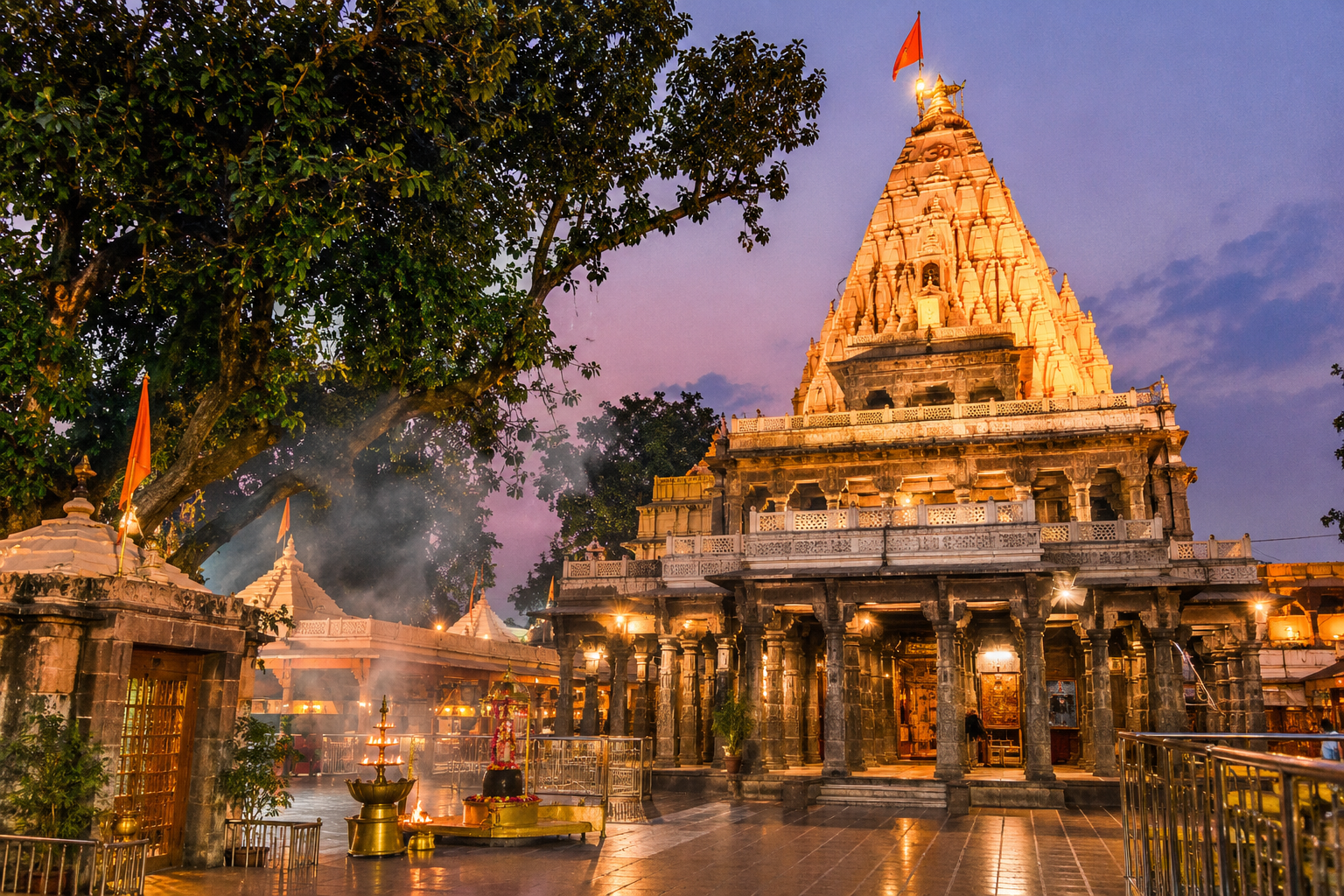
Shri Mahakaleshwar Jyotirlinga is one of the most sacred Shiva temples in India. Located in Ujjain, Madhya Pradesh, this ancient shrine is famous for its south-facing Jyotirlinga, traditional Bhasma Aarti and deep spiritual significance.
श्री महाकालेश्वर ज्योतिर्लिंग भारत के सबसे पवित्र शिव मंदिरों में से एक है। मध्य प्रदेश के उज्जैन में स्थित यह प्राचीन मंदिर दक्षिणमुखी ज्योतिर्लिंग, प्रसिद्ध भस्म आरती और अपनी आध्यात्मिक महत्ता के लिए जाना जाता है।
महत्वपूर्ण: दर्शन, भस्म आरती बुकिंग और प्रवेश के नियम बदल सकते हैं। यात्रा से पहले आधिकारिक मंदिर वेबसाइट पर जानकारी अवश्य जांचें।
Introduction to Mahakal Temple / महाकाल मंदिर का परिचय
Mahakaleshwar Temple is situated in the historic city of Ujjain, traditionally known as Ujjayini and Avanti. The temple is dedicated to Lord Shiva, worshipped here as Mahakala, the Lord of Time.
महाकालेश्वर मंदिर प्राचीन नगरी उज्जैन में स्थित है। उज्जैन को ऐतिहासिक रूप से उज्जयिनी और अवंति के नाम से भी जाना जाता है। यह मंदिर भगवान शिव को समर्पित है, जहां उनकी पूजा महाकाल स्वरूप में की जाती है।
The Mahakaleshwar Lingam is traditionally regarded as Swayambhu, meaning self-manifested. It is also known for its south-facing orientation, which makes it distinctive among the twelve Jyotirlingas.
महाकालेश्वर ज्योतिर्लिंग को परंपरागत रूप से स्वयंभू माना जाता है, जिसका अर्थ है स्वयं प्रकट हुआ शिवलिंग। यह दक्षिणमुखी होने के कारण बारह ज्योतिर्लिंगों में अपनी विशेष पहचान रखता है।
For millions of devotees, Mahakal Temple is not only a pilgrimage destination but also a symbol of faith, devotion and the ancient spiritual heritage of India.
लाखों श्रद्धालुओं के लिए महाकाल मंदिर केवल एक तीर्थस्थल नहीं, बल्कि आस्था, भक्ति और भारत की प्राचीन आध्यात्मिक विरासत का प्रतीक है।
Religious Significance of Mahakal Temple / महाकाल मंदिर का धार्मिक महत्व
A Jyotirlinga represents the infinite divine light associated with Lord Shiva. Shri Mahakaleshwar is one of the twelve traditionally recognised Jyotirlingas of India.
ज्योतिर्लिंग भगवान शिव के अनंत प्रकाश स्वरूप का प्रतीक माना जाता है। श्री महाकालेश्वर भारत के बारह पारंपरिक ज्योतिर्लिंगों में से एक हैं।
The name Mahakala is associated with the power of time and eternity. Devotees believe that Lord Shiva protects the city of Ujjain and blesses those who worship him with devotion.
महाकाल नाम समय और अनंतता की शक्ति से जुड़ा है। श्रद्धालुओं की मान्यता है कि भगवान शिव उज्जैन नगरी की रक्षा करते हैं और सच्ची श्रद्धा से पूजा करने वाले भक्तों को आशीर्वाद देते हैं।
Ujjain has also been an important centre of ancient Indian learning, astronomy, literature and religious traditions.
उज्जैन प्राचीन भारत में शिक्षा, खगोल विज्ञान, साहित्य और धार्मिक परंपराओं का भी महत्वपूर्ण केंद्र रहा है।
The Mythological Story of Mahakaleshwar / महाकालेश्वर की पौराणिक कथा
According to a popular account associated with the Shiva Purana tradition, the ancient city of Avanti was threatened by a demon named Dushana. The residents prayed to Lord Shiva for protection.
शिव पुराण की परंपरा से जुड़ी एक प्रसिद्ध कथा के अनुसार, प्राचीन अवंतिका नगरी पर दूषण नामक असुर ने आक्रमण किया। नगरवासियों ने भगवान शिव से अपनी रक्षा की प्रार्थना की।
Moved by the devotion of his followers, Lord Shiva appeared in the powerful form of Mahakala and defeated the demon. According to the sacred tradition, Lord Shiva then remained at this place as a Jyotirlinga.
भक्तों की प्रार्थना सुनकर भगवान शिव महाकाल रूप में प्रकट हुए और असुर का अंत किया। धार्मिक मान्यता के अनुसार इसके बाद भगवान शिव यहां ज्योतिर्लिंग स्वरूप में विराजमान हुए।
King Chandrasena and Shrikhar / राजा चंद्रसेन और श्रीकर
Another popular devotional narrative mentions King Chandrasena, a devotee of Shiva, and a young boy named Shrikhar. Different versions of the story describe their devotion and the divine protection of Ujjain.
एक अन्य लोकप्रिय कथा में शिवभक्त राजा चंद्रसेन और श्रीकर नामक बालक का उल्लेख मिलता है। कथा के विभिन्न रूपों में उनकी भक्ति और उज्जैन की दिव्य रक्षा का वर्णन किया गया है।
ये धार्मिक आख्यान और पारंपरिक मान्यताएं हैं, इन्हें प्रमाणित आधुनिक ऐतिहासिक घटनाओं के रूप में प्रस्तुत नहीं करना चाहिए।
History of Mahakal Temple / महाकाल मंदिर का इतिहास
The exact date of the original construction of Mahakaleshwar Temple is not known with certainty. Its history includes ancient religious traditions, successive phases of construction and later rebuilding.
महाकालेश्वर मंदिर के मूल निर्माण की सटीक तारीख निश्चित रूप से ज्ञात नहीं है। इसके इतिहास में प्राचीन धार्मिक परंपराएं, अलग-अलग निर्माण चरण और बाद के पुनर्निर्माण शामिल हैं।
Ancient Ujjain / प्राचीन उज्जैन
Ujjain was an important city in ancient India. It was associated with the Avanti region and played a significant role in trade, culture, education and religious life.
प्राचीन भारत में उज्जैन एक महत्वपूर्ण नगर था। यह अवंति क्षेत्र से जुड़ा रहा और व्यापार, संस्कृति, शिक्षा तथा धार्मिक गतिविधियों में इसकी प्रमुख भूमिका थी।
Medieval Period / मध्यकालीन काल
The temple experienced periods of political conflict and damage during medieval times. Despite these challenges, Mahakaleshwar continued to remain an important place of worship for devotees.
मध्यकाल में मंदिर ने राजनीतिक संघर्ष और क्षति के कई दौर देखे। इसके बावजूद महाकालेश्वर मंदिर श्रद्धालुओं की आस्था का महत्वपूर्ण केंद्र बना रहा।
Maratha Reconstruction / मराठा काल में पुनर्निर्माण
The present temple structure developed through later reconstruction, particularly during the eighteenth century under Maratha influence. The official temple history associates the reconstruction with Ramchandra Baba Shenvi.
वर्तमान मंदिर की संरचना बाद के पुनर्निर्माणों के माध्यम से विकसित हुई, विशेषकर अठारहवीं सदी के मराठा काल में। मंदिर के आधिकारिक इतिहास में रामचंद्र बाबा शेणवी का नाम पुनर्निर्माण से जुड़ा है।
Therefore, it is not historically appropriate to claim that the entire present temple was constructed by King Bhoja in a single period.
इसलिए यह निश्चित रूप से कहना उचित नहीं होगा कि वर्तमान मंदिर का पूरा निर्माण किसी एक काल में राजा भोज ने कराया था।
Architecture of Mahakal Temple / महाकाल मंदिर की वास्तुकला
The temple complex displays a combination of architectural influences. The official temple description refers to Bhoomija, Chalukya and Maratha styles.
मंदिर परिसर में विभिन्न स्थापत्य शैलियों का मेल देखने को मिलता है। मंदिर के आधिकारिक विवरण में भूमिज, चालुक्य और मराठा शैली के प्रभाव का उल्लेख है।
The Main Sanctum / मुख्य गर्भगृह
The main Mahakaleshwar shrine is located on the lower level. The south-facing Jyotirlinga is the central focus of worship.
मुख्य महाकालेश्वर गर्भगृह निचले स्तर पर स्थित है। दक्षिणमुखी ज्योतिर्लिंग यहां की पूजा का मुख्य केंद्र है।
Omkareshwar and Nagchandreshwar / ओंकारेश्वर और नागचंद्रेश्वर
The Omkareshwar shrine is located above the main Mahakal shrine. The Nagchandreshwar shrine is on the upper level and is traditionally opened for public darshan on Nag Panchami.
मुख्य महाकाल मंदिर के ऊपर ओंकारेश्वर का मंदिर स्थित है। ऊपरी स्तर पर नागचंद्रेश्वर मंदिर है, जिसके दर्शन परंपरागत रूप से नागपंचमी के दिन श्रद्धालुओं के लिए खोले जाते हैं।
Koti Tirtha / कोटितीर्थ
Koti Tirtha is an important sacred area within the temple complex and forms part of the religious landscape of Mahakaleshwar.
कोटितीर्थ मंदिर परिसर का एक महत्वपूर्ण पवित्र क्षेत्र है और महाकालेश्वर की धार्मिक परंपरा का हिस्सा है।
Bhasma Aarti at Mahakal Temple / महाकाल मंदिर की भस्म आरती
Bhasma Aarti is one of the most distinctive rituals of Mahakaleshwar Temple. It takes place in the early morning and is attended by devotees who wish to experience this sacred tradition.
भस्म आरती महाकालेश्वर मंदिर के सबसे विशिष्ट अनुष्ठानों में से एक है। इसका आयोजन प्रातःकाल होता है और इस पवित्र परंपरा का अनुभव करने के लिए श्रद्धालु इसमें शामिल होते हैं।
Religious Meaning / धार्मिक महत्व
Bhasma is traditionally associated with the impermanence of worldly life and the eternal nature of the divine. During the ritual, sacred ash forms part of the ceremonial worship of Lord Mahakaleshwar.
भस्म को संसार की नश्वरता और परमात्मा की अनंतता का प्रतीक माना जाता है। इस अनुष्ठान में पवित्र भस्म भगवान महाकाल की पूजा का हिस्सा होती है।
Bhasma Aarti Booking / भस्म आरती बुकिंग
Advance registration or permission may be required. Booking availability, reporting time, identity requirements and entry rules can change. Check the official temple portal before planning your visit.
भस्म आरती के लिए अग्रिम पंजीकरण या अनुमति की आवश्यकता हो सकती है। बुकिंग की उपलब्धता, रिपोर्टिंग समय, पहचान-पत्र और प्रवेश नियम बदल सकते हैं। यात्रा से पहले आधिकारिक पोर्टल पर जानकारी जांचें।
भस्म आरती के लिए अनधिकृत एजेंटों से बुकिंग न कराएं।
Daily Rituals at Mahakal Temple / महाकाल मंदिर में दैनिक पूजा
Daily worship at the temple includes ritual bathing, offerings, mantra recitation and aarti at designated times. Devotees offer prayers with traditional materials such as water, bilva leaves and flowers, subject to temple rules.
मंदिर में दैनिक पूजा के अंतर्गत अभिषेक, पूजन, मंत्रोच्चार और निर्धारित समय पर आरती होती है। श्रद्धालु मंदिर के नियमों के अनुसार जल, बेलपत्र और पुष्प जैसी पारंपरिक सामग्री अर्पित करते हैं।
Abhishek / अभिषेक
Abhishek is a traditional form of Shiva worship. Water and other permitted sacred offerings are used during the ritual according to the temple’s prescribed procedure.
अभिषेक भगवान शिव की पारंपरिक पूजा-विधि है। इसमें मंदिर की निर्धारित प्रक्रिया के अनुसार जल और अन्य अनुमत पवित्र सामग्री का उपयोग किया जाता है।
Aarti and Mantra / आरती और मंत्र
Aarti and mantra recitation are important parts of daily worship. They create an atmosphere of devotion and spiritual reflection for visitors.
आरती और मंत्रोच्चार दैनिक पूजा के महत्वपूर्ण अंग हैं। इनसे मंदिर में भक्तिमय और आध्यात्मिक वातावरण बनता है।
Major Festivals at Mahakal Temple / महाकाल मंदिर के प्रमुख उत्सव
Mahashivratri / महाशिवरात्रि
Mahashivratri is one of the most important festivals at Mahakaleshwar Temple. Special worship and devotional programmes attract large numbers of pilgrims.
महाशिवरात्रि महाकालेश्वर मंदिर के प्रमुख पर्वों में से एक है। इस अवसर पर विशेष पूजा और धार्मिक कार्यक्रम आयोजित होते हैं तथा बड़ी संख्या में श्रद्धालु दर्शन के लिए पहुंचते हैं।
Shravan Month / श्रावण मास
The month of Shravan is dedicated to Lord Shiva. Special worship and religious activities take place during this sacred month.
श्रावण मास भगवान शिव की आराधना के लिए विशेष माना जाता है। इस पूरे महीने में विशेष पूजा और धार्मिक गतिविधियां आयोजित होती हैं।
Mahakal Sawari / महाकाल सवारी
The traditional Mahakal Sawari procession takes place on designated Mondays during the Shravan period. The route and schedule are announced by the local administration.
श्रावण काल में निर्धारित सोमवारों को महाकाल की पारंपरिक सवारी निकाली जाती है। इसका मार्ग और समय प्रशासन द्वारा घोषित किया जाता है।
Nag Panchami / नागपंचमी
Nag Panchami is especially significant because the Nagchandreshwar shrine is traditionally opened for public darshan on this occasion.
नागपंचमी का विशेष महत्व है क्योंकि इस दिन नागचंद्रेश्वर मंदिर के दर्शन परंपरागत रूप से श्रद्धालुओं के लिए खोले जाते हैं।
Simhastha Kumbh / सिंहस्थ कुंभ
Ujjain is one of the traditional Kumbh Mela locations in India. Simhastha is held approximately once every twelve years according to the relevant religious and astrological calendar.
उज्जैन भारत के पारंपरिक कुंभ स्थलों में से एक है। सिंहस्थ का आयोजन संबंधित धार्मिक और ज्योतिषीय गणना के अनुसार लगभग बारह वर्ष में एक बार होता है।
Shri Mahakal Lok Corridor / श्री महाकाल लोक कॉरिडोर
Shri Mahakal Lok is a major development around the Mahakaleshwar Temple precinct. It features sculptures, landscaped areas, pillars and artistic representations inspired by the stories and traditions of Lord Shiva.
श्री महाकाल लोक महाकालेश्वर मंदिर क्षेत्र के आसपास विकसित एक महत्वपूर्ण परिसर है। इसमें मूर्तियां, सुंदर खुले स्थान, स्तंभ और भगवान शिव की कथाओं तथा परंपराओं से प्रेरित कलात्मक प्रस्तुतियां देखने को मिलती हैं।
The corridor has become an important attraction for pilgrims and tourists. Visitors should follow current entry, security and parking instructions issued by the local administration.
यह कॉरिडोर श्रद्धालुओं और पर्यटकों के लिए एक महत्वपूर्ण आकर्षण बन गया है। आगंतुकों को प्रवेश, सुरक्षा और पार्किंग से संबंधित प्रशासनिक निर्देशों का पालन करना चाहिए।
Mahakal Temple Darshan and Travel Guide / महाकाल मंदिर दर्शन और यात्रा
Location / स्थान
Shri Mahakaleshwar Jyotirlinga is located in Ujjain, Madhya Pradesh, India.
श्री महाकालेश्वर ज्योतिर्लिंग मध्य प्रदेश के उज्जैन शहर में स्थित है।
How to Reach / कैसे पहुंचें
By Train: Ujjain Junction is the main railway station serving the city. Local transport is available to reach the temple.
रेल मार्ग: उज्जैन जंक्शन शहर का प्रमुख रेलवे स्टेशन है। यहां से स्थानीय साधनों द्वारा मंदिर पहुंचा जा सकता है।
By Air: Devi Ahilyabai Holkar Airport in Indore is the nearest major airport commonly used by visitors. The road distance