
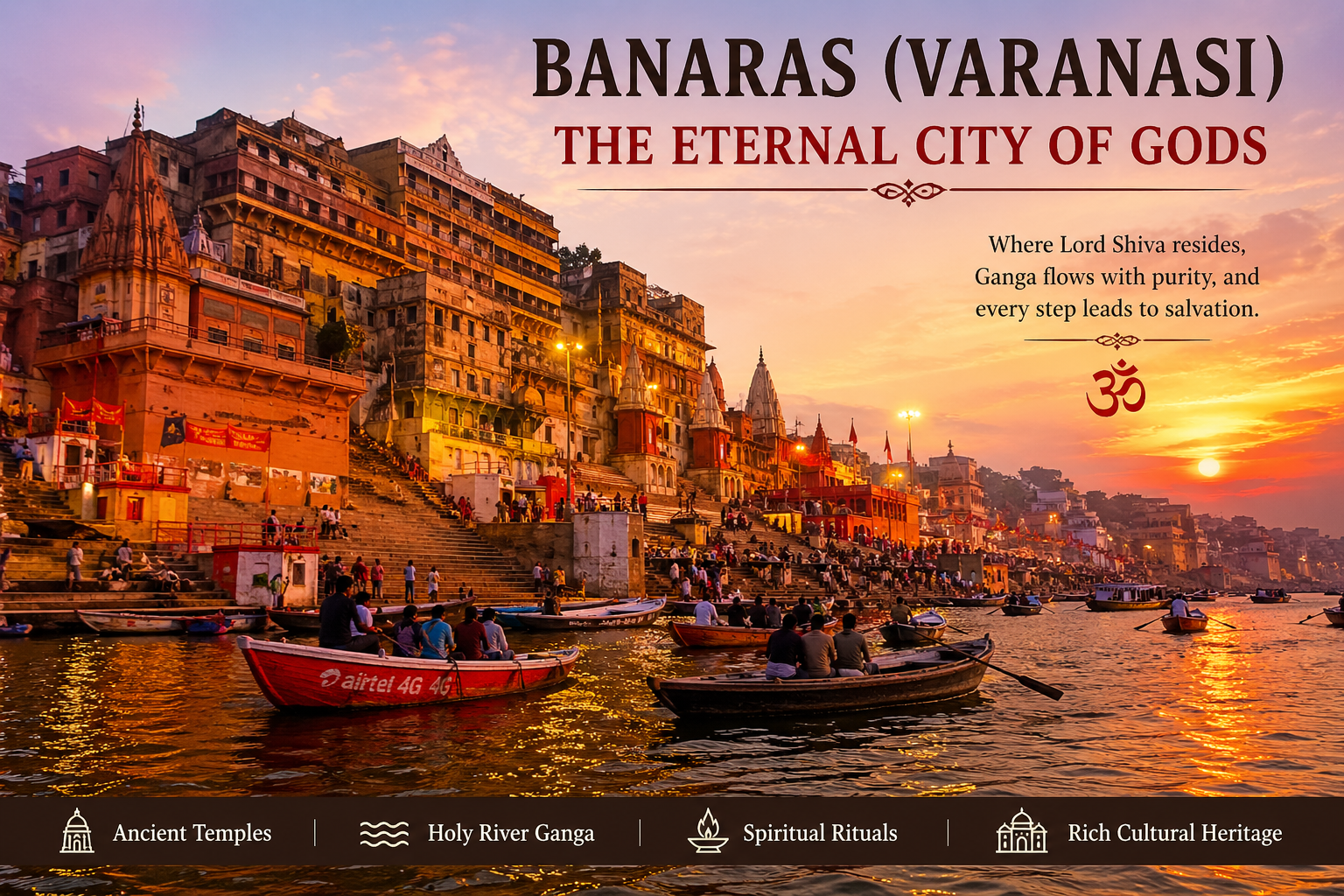
Introduction: The Oldest Living City of India
India is a country of ancient culture and deep spirituality. Among all its sacred cities, Varanasi holds a very special place. It is also known as Banaras or Kashi.
Varanasi is often called the “Eternal City of Gods” because it is believed to be one of the oldest living cities in the world and a divine place where gods and humans coexist spiritually.
People from all over India and the world visit this holy city to experience peace, spirituality, and liberation.
Why is Banaras So Special?
Banaras is not just a city—it is a spiritual experience.
It is located on the banks of the sacred river Ganga, which is considered the purest river in Hinduism.
According to belief:
- Lord Shiva resides in Kashi forever
- Death in Varanasi leads to moksha (liberation)
- The city is never destroyed, even after cosmic cycles
This makes it one of the most sacred places in India.
Ancient History of Banaras
The history of Varanasi goes back more than 3000 years, making it one of the oldest continuously inhabited cities in the world.
In ancient times:
- It was called Kashi, which translates to “City of Light.”
- It was a major center of education, culture, and spirituality
- Great sages and saints lived here
Even in ancient scriptures like the Vedas and Puranas, Kashi is mentioned as a divine city.
Mythological Importance of Varanasi
According to Hindu mythology, Varanasi was established by Lord Shiva himself.
It is believed that:
- Lord Shiva never leaves Kashi
- Goddess Parvati also resides here spiritually
- The city is protected by divine energy
Because of this, Banaras is called:
“The City of Lord Shiva”
Ganga River and Its Spiritual Power
The river Ganga is the heart of Varanasi.
People believe that:
- Taking a bath in the Ganga washes sins
- Performing rituals here brings peace to ancestors
- The river connects earth and heaven
Every morning in Varanasi, thousands of devotees perform rituals on the ghats.
The most famous ghats include:
- Dashashwamedh Ghat
- Manikarnika Ghat
- Assi Ghat
Varanasi as a Center of Knowledge
In ancient India, Varanasi was a major education hub.
It attracted scholars from all over the country.
Subjects taught included:
- Philosophy
- Astronomy
- Sanskrit literature
- Spiritual science
Even today, Banaras Hindu University (BHU) continues this tradition of learning.
Why is it Called the Eternal City of Gods?
Varanasi is called the Eternal City of Gods because of its spiritual beliefs:
1. Home of Lord Shiva
Lord Shiva is believed to permanently reside in Kashi.
2. Never Destroyed
Unlike other cities, it is believed Varanasi survives every cosmic destruction cycle.
3. Gateway to Moksha
People believe dying in Varanasi leads to liberation from the cycle of rebirth.
4. Constant Spiritual Energy
The city is always filled with chants, prayers, and rituals.
Culture and Daily Life in Banaras
Life in Varanasi is a mix of tradition and spirituality.
You can see:
- Morning prayers on river ghats
- Temples on every street
- Classical music and Sanskrit chants
- Narrow lanes filled with history
Famous cultural elements include:
- Banarasi silk sarees
- Street food like kachori and lassi
- Classical music and tabla traditions
Temples of Varanasi
Varanasi is home to many ancient temples.
The most famous is:
- Kashi Vishwanath Temple – dedicated to Lord Shiva
Other important temples:
- Sankat Mochan Hanuman Temple
- Durga Kund Temple
- Kal Bhairav Temple
Each temple has deep spiritual importance.
Varanasi in Modern Times
Today, Varanasi is a blend of ancient and modern life.
It is:
- A major tourist destination
- A spiritual center
- A cultural heritage city
- A growing urban hub
Even Prime Minister of India represents Varanasi in Parliament, showing its national importance.
Life Lessons from Banaras
Varanasi teaches us many things:
- Life is temporary, spirituality is eternal
- Peace comes from simplicity
- Faith gives strength
- Tradition connects us to our roots
Why People Visit Varanasi
People visit Banaras for many reasons:
- Spiritual peace
- Religious rituals
- Ganga Aarti experience
- Historical exploration
- Cultural learning
The evening Ganga Aarti is one of the most beautiful spiritual experiences in India.
FAQ – Banaras (Varanasi) History & Spiritual Importance
1. Why is Banaras called the Eternal City of Gods?
Varanasi is called the Eternal City of Gods because it is believed that Lord Shiva always resides here and the city is never destroyed, even after cosmic cycles. It is considered a timeless spiritual place.
2. What is the old name of Banaras?
The ancient name of Banaras is Kashi, which means “City of Light.” It is one of the oldest names mentioned in Hindu scriptures.
3. Why is Varanasi so important in Hinduism?
Varanasi is considered the holiest city because it is believed that dying here leads to moksha (liberation). The Ganga River and other holy temples are located there as well.
4. Which river is famous in Banaras?
The holy river Ganga (Ganges) flows through Varanasi and is considered spiritually purifying. People believe bathing in it washes away sins.
5. What are the famous places in Varanasi?
Some famous places include:
- Kashi Vishwanath Temple
- Dashashwamedh Ghat
- Manikarnika Ghat
- Assi Ghat
These places are deeply connected with spirituality and ancient traditions.
Conclusion
Banaras (Varanasi) is not just a city—it is a living symbol of faith, history, and spirituality.
It has survived thousands of years and still continues to inspire people.
That is why it is called the:
“Eternal City of Gods”
It connects the past, present, and future in one divine flow.